

According to the U.S. Department of Energy, LED holiday light strands use about 70% less energy than traditional incandescent bulbs, and ENERGY STAR certified decorative light strings consume up to 92% less energy than conventional incandescent strands. That’s a genuinely well-documented efficiency gain — but for anyone shopping for battery-operated energy efficient Halloween lights specifically, the usual “save money on your electric bill” pitch that comes with these numbers doesn’t actually apply, and it’s worth understanding why.
This distinction rarely comes up in typical holiday lighting advice, which almost universally frames LED efficiency in terms of plug-in electric bills without pausing to consider battery-operated products at all. Given how common battery-operated Halloween decorations have become, that gap in the usual advice is worth addressing directly rather than letting the marketing language do the explaining.
Table of Contents
The Real DOE Data on LED Efficiency Behind Energy Efficient Halloween Lights
The Department of Energy’s own efficiency comparison is specific and well-documented. LED light strands use roughly 70% less energy than incandescent equivalents for the same brightness and length, according to DOE’s own energy-saving guidance. ENERGY STAR’s own certification standard goes further, requiring certified decorative light strings to use no more than 0.2 watts per bulb and to consume up to 92% less energy than conventional incandescent strands to earn the label.
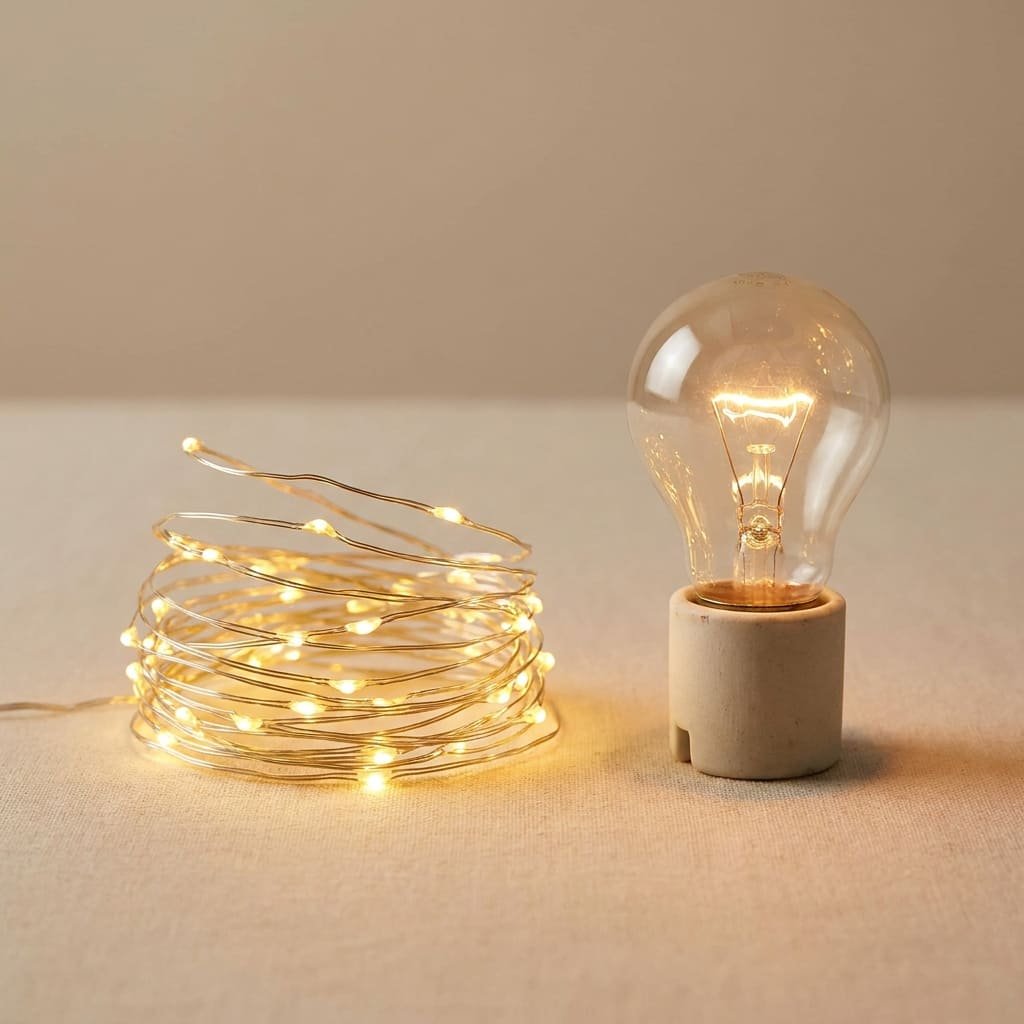
This efficiency gain shows up in real terms most commonly cited for plug-in lighting: lower electric bills, the ability to connect more strings together without overloading a wall socket, and genuinely lower surface heat on each bulb. DOE’s own guidance specifically notes that LED strands run cooler than incandescent ones, which is part of why they’re considered safer for extended, unattended display.
Both figures are worth sitting with specifically, since they come from different but complementary sources. The 70% figure reflects general LED technology compared to incandescent bulbs broadly, while the 92% figure reflects the stricter efficiency threshold a product must meet to actually earn ENERGY STAR certification specifically. A product can be a genuine energy efficient Halloween lights option using standard LED technology without meeting that stricter certified threshold, which is worth understanding before assuming every LED product on the market performs identically.
Why Energy Efficient Halloween Lights Matter Differently for Battery-Operated Decor
Here’s the honest catch: none of the “lower electric bill” framing applies to energy efficient Halloween lights that run on batteries instead of a wall outlet. A battery-operated garland was never drawing household current in the first place, so there’s no electric bill to reduce regardless of how efficient the LEDs inside it are. The DOE and ENERGY STAR efficiency data is real and well-documented, but the specific financial benefit most articles attach to it — cheaper electricity costs — simply doesn’t exist for a product that was never plugged in.
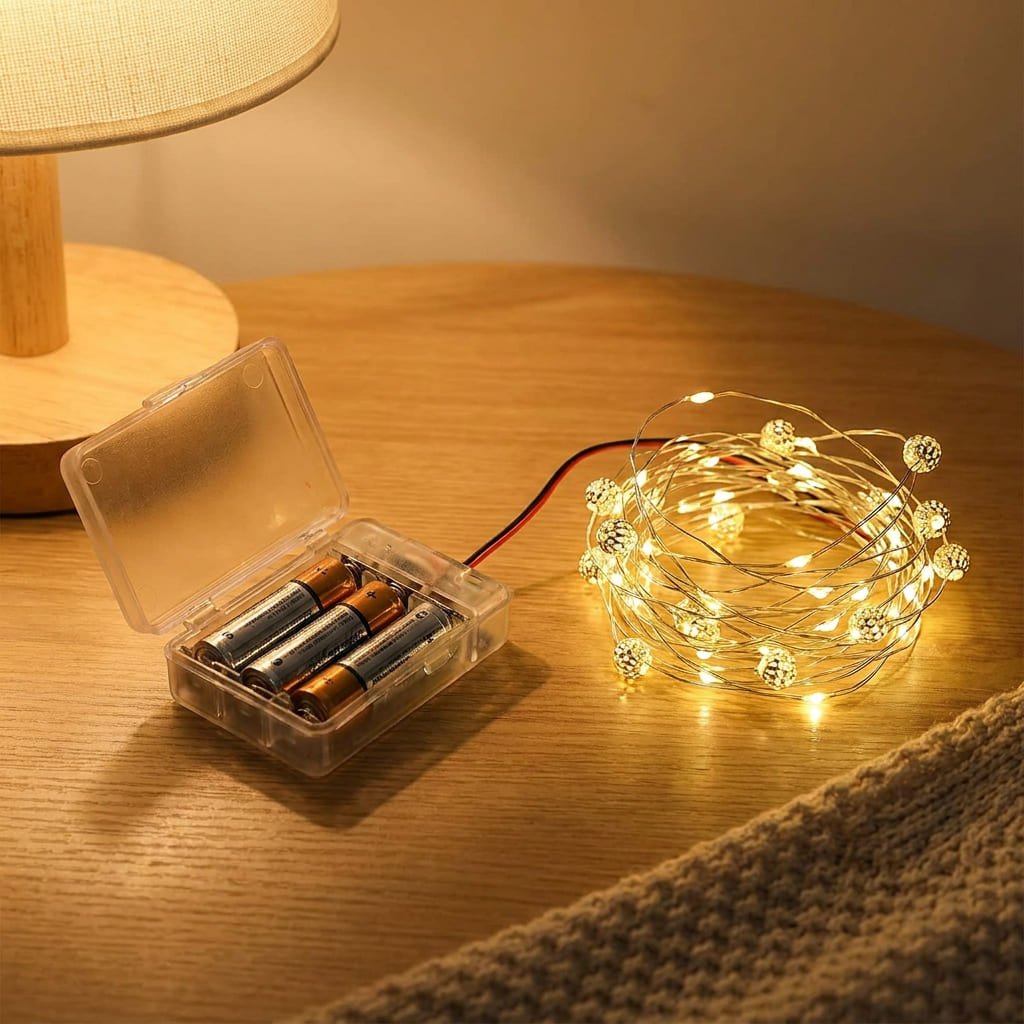
What the same underlying efficiency actually delivers for battery-operated energy efficient Halloween lights is something different but genuinely valuable: extended battery runtime. The same physical principle that lets an LED bulb draw 70-92% less power than an incandescent bulb also means a battery-operated LED string pulls less current from its batteries per hour of use than an equivalent incandescent design would, which translates directly into more total hours of light before the batteries need replacing.
This distinction matters because it’s easy to see “LED” and “energy efficient” marketing language on a battery-operated product and assume it’s promising something it isn’t. The efficiency is genuinely real — it just shows up as battery life rather than a utility bill line item, which is a meaningfully different value proposition that deserves to be described accurately rather than borrowed wholesale from plug-in lighting marketing.
This kind of mismatch between marketing language and actual applicable benefit isn’t unique to Halloween lighting specifically. Any battery-operated product borrowing efficiency claims originally developed for plug-in equivalents is worth this same quick translation exercise: what specific, applicable benefit does the underlying efficiency actually deliver in this particular product’s context, rather than assuming the most commonly cited benefit automatically transfers over.
What This Means for This Halloween Garland Lights Product as Energy Efficient Halloween Lights
Our Halloween garland lights review already covers a battery-operated LED garland with 40 total LEDs across two strings, and this DOE/ENERGY STAR efficiency context applies directly to it. The same LED technology that would reduce someone’s electric bill in a plug-in application instead means this specific garland should draw less current per hour from its 4 AA batteries than an incandescent equivalent would, extending realistic runtime per battery set.
It’s worth being honest that this specific garland’s official ENERGY STAR certification status wasn’t independently confirmed as part of this research — the broader LED-versus-incandescent efficiency principle is well-documented regardless of whether any individual product carries the certification label itself, but the certification label specifically guarantees the strictest 92% figure, while general LED technology reliably delivers somewhere in DOE’s broader 70%-plus range even without formal certification.
This is a reasonable expectation to carry into battery-operated energy efficient Halloween lights purchases more broadly, not just this one specific garland. Any LED-based decoration running on standard alkaline batteries should reasonably outlast an equivalent incandescent design on the same battery set, purely as a function of the underlying power-draw difference DOE and ENERGY STAR have already documented — even without a specific runtime figure printed on the packaging.
The Safety Angle That’s Not About Bills at All for Energy Efficient Halloween Lights
DOE’s own guidance also touches on a safety point that’s genuinely separate from the energy or battery-life discussion: LED bulbs run measurably cooler than incandescent bulbs, which matters for decoration safety independent of how the lights are powered. Our Halloween lighting safety guide already covers real CPSC data on decoration-related home fires, many of which involve a heat source placed too close to flammable material.

Lower bulb surface heat is a genuinely separate safety factor from the battery-versus-plug-in distinction already covered in that guide. A battery-operated LED string benefits from both the reduced electrical-fire risk of not being plugged in at all, and the reduced heat-contact risk of using LED technology specifically — two independent safety advantages that happen to stack together in a product like this Halloween garland lights review’s subject, rather than one advantage doing double duty.
Thinking of these as two separate, additive safety factors rather than one combined feature is worth doing deliberately. A plug-in LED string still benefits from the reduced-heat advantage even though it doesn’t get the cordless advantage, and a battery-operated incandescent decoration (a less common but real product category) would keep the cordless advantage while losing the reduced-heat one. This specific garland happens to combine both factors, which is worth recognizing as two genuine, independently documented advantages rather than a single vague “it’s safer” claim.
Where Energy Efficient Halloween Lights Connect to Other Decor and Safety Content
Energy efficient Halloween lights are one piece of a broader picture of thoughtful seasonal decorating already covered on this site. Our Halloween skeleton decoration review covers a different category of Halloween decor entirely, without the lighting-specific considerations discussed here, while our no-damage Halloween decorating guide covers the broader low-risk decorating principles that apply across lighting, textile, and prop-based decorations alike.
None of this requires treating energy efficiency or battery life as the deciding factor in a Halloween lighting purchase. It’s simply useful, accurate context for anyone who’s seen “LED” or “energy efficient” on a battery-operated product’s packaging and wondered what that claim actually delivers, given that it isn’t the electric bill savings the same language usually implies on plug-in products.
Applying this same accurate-translation habit to future purchases is a genuinely useful skill beyond just energy efficient Halloween lights specifically. Any time a battery-operated product borrows efficiency or performance language originally developed for a plugged-in equivalent, a quick mental check of what benefit actually transfers — and what doesn’t — leads to a more accurate expectation than taking the marketing language at face value.
Frequently Asked Questions
Do energy efficient Halloween lights actually save money if they’re battery-operated, or is that framing accurate for these energy efficient Halloween lights? Not in the electric-bill sense most efficiency marketing implies. A battery-operated product was never drawing household current, so there’s no electric bill to reduce. The real benefit shows up as extended battery runtime instead.
How much less energy do LED holiday lights actually use than incandescent? According to the Department of Energy, LED light strands use about 70% less energy than incandescent equivalents, while ENERGY STAR certified strings can use up to 92% less energy.
Does LED efficiency make battery-operated lights last longer between battery changes? Yes, in principle. The same reduced power draw that lowers electric bills for plug-in LED lighting also means a battery-operated LED string pulls less current per hour, extending realistic battery life compared to an equivalent incandescent design.
Are LED lights safer than incandescent lights regardless of power source, and does that make a difference for energy efficient Halloween lights generally? Yes, in one specific respect. LED bulbs run measurably cooler than incandescent bulbs according to DOE’s own guidance, which reduces heat-related ignition risk independent of whether the product is battery-operated or plugged in.
Is it worth looking for ENERGY STAR certification on battery-operated decorative lights specifically, when shopping for energy efficient Halloween lights? It’s a reasonable bonus signal, though general LED technology delivers meaningful efficiency gains even without formal certification. ENERGY STAR certification specifically guarantees the strictest efficiency threshold, but its absence on a battery-operated product doesn’t mean the LEDs inside aren’t genuinely efficient.
The Bottom Line on Energy Efficient Halloween Lights
Energy efficient Halloween lights carry real, well-documented efficiency data from the Department of Energy and ENERGY STAR, but that data on energy efficient Halloween lights was originally framed around plug-in lighting and electric bills. For battery-operated products, the same underlying efficiency is just as real — it simply shows up as extended battery runtime and cooler-running bulbs rather than a lower utility bill, which is worth understanding accurately rather than assuming the marketing language means the same thing it does on a plug-in string.
None of this changes whether a specific product is worth buying on its own merits — design, price, and durability still matter just as much as they would otherwise. It simply means reading “LED” or “energy efficient” on a battery-operated decoration’s packaging with an accurate understanding of what that claim actually delivers, rather than an assumption borrowed from a completely different product category.
This kind of accurate translation between marketing claims and actual product context is a small habit, but it pays off across seasonal shopping more broadly than just Halloween lighting. Understanding that an efficiency figure developed for one product category doesn’t automatically carry the same practical benefit into a different category — battery-operated versus plug-in, indoor versus outdoor, single-use versus reusable — leads to more accurate expectations across a much wider range of purchases than just this one string of lights.
Understanding this distinction once means it’s available for every future battery-operated purchase carrying similar efficiency language, whether it’s energy efficient Halloween lights, a battery-powered fan, or any other product borrowing terminology originally developed for plugged-in equivalents.
The next time a battery-operated seasonal decoration advertises itself using LED efficiency language, this same quick check applies to energy efficient Halloween lights and similar products alike: ask what specific benefit the efficiency actually delivers in that product’s real context, rather than assuming it automatically means a lower utility bill the way it would on a plug-in equivalent.
This article reflects publicly available data from the U.S. Department of Energy and ENERGY STAR. It is not a substitute for checking current product-specific certification status directly with the manufacturer.