
According to the U.S. Consumer Product Safety Commission, electrical cords and plugs were associated with an average of 1,600 fires a year from 2017 through 2019, based on the agency’s own residential fire loss estimates. That figure sits alongside roughly 3,200 Halloween-related injuries treated in emergency departments annually, a quarter of which come from falls while putting up or taking down decorations. Halloween lighting safety isn’t a niche concern — it’s a documented, government-tracked category of real risk, and it’s worth understanding honestly rather than glossing over.
Table of Contents
The Real Numbers Behind Halloween Lighting Safety Specifically
The CPSC’s most recent Halloween safety data breaks down where these injuries actually come from. Over the past three years tracked, pumpkin carving accounted for 55% of Halloween-related injuries, falls while decorating or trick-or-treating made up 25%, and the remaining 20% covered lacerations, ingestions, and other incidents tied to costumes, pumpkins, or decorations. Adults made up 54% of those injured, a reminder that Halloween lighting safety isn’t just a concern for the children involved in trick-or-treating.
That adult-injury figure is worth sitting with for a moment, since Halloween safety messaging often implicitly centers on protecting trick-or-treating children specifically. The reality reflected in CPSC’s own numbers is more evenly split — adults putting up decorations, carving pumpkins, and maintaining displays are just as much a part of the actual injury picture as the children walking door to door that evening.
The fire-specific numbers come from a separate CPSC residential fire loss report covering 2017 through 2019. Candles were associated with an average of 5,600 fires a year over that period — still the larger category — while electrical cords and plugs were associated with 1,600 fires annually. Both figures matter for anyone thinking seriously about Halloween lighting safety, since they point to two genuinely different hazard categories: open flame and electrical failure.
It’s worth being precise about what this data does and doesn’t show. These figures aren’t broken out specifically by holiday lighting versus general household electrical cords and plugs — they reflect the broader category CPSC tracks. But the agency’s own Halloween-specific guidance explicitly calls out lighting as a decorating risk worth addressing, which is a reasonable signal that holiday and seasonal lighting represents a meaningful share of that broader electrical fire total.
What Actually Causes These Halloween Lighting Safety Failures
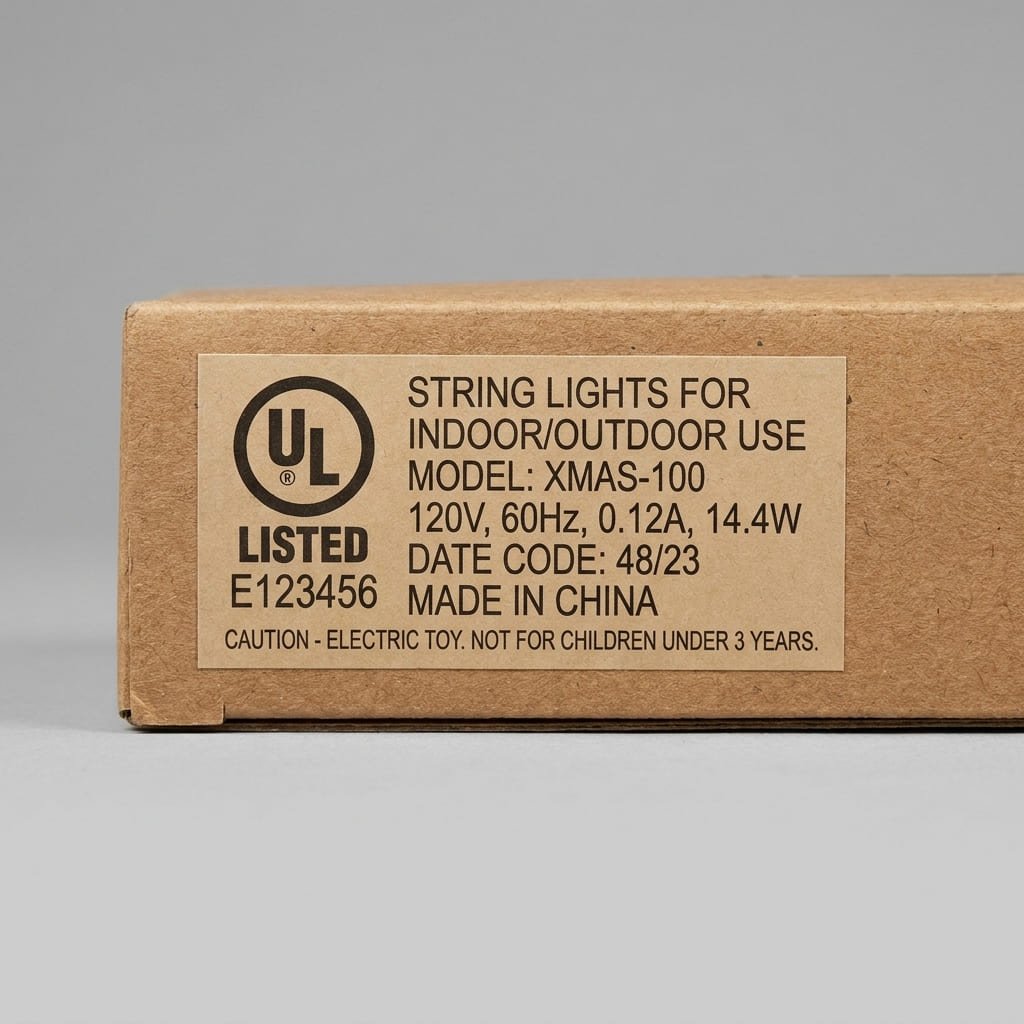
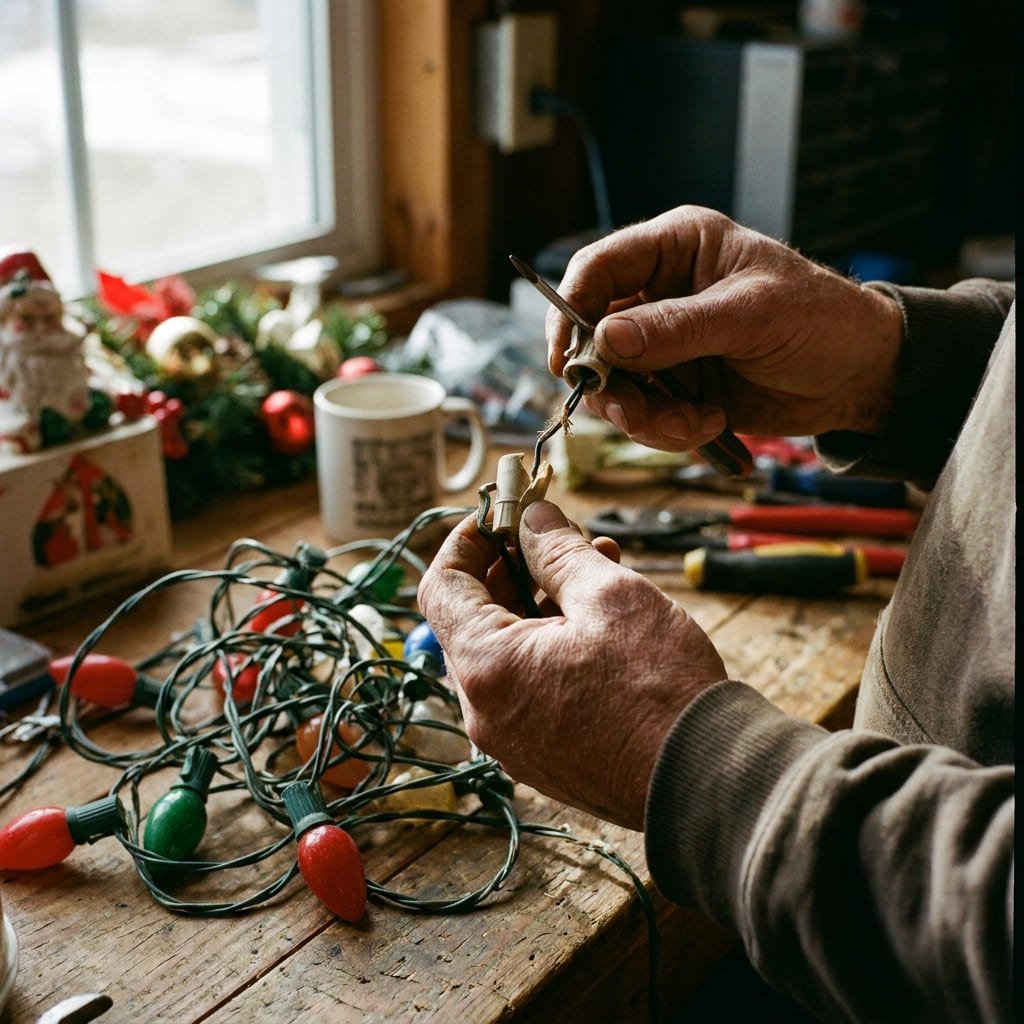
CPSC’s own guidance is specific about the mechanism behind electrical fires tied to holiday lighting, and it’s worth taking that Halloween lighting safety guidance seriously rather than treating it as vague common sense. The agency recommends using only lights tested by a recognized testing laboratory, checking every set — new or old — for broken or cracked sockets, frayed or bare wires, or loose connections, and discarding any damaged sets outright rather than continuing to use them.
This points to a specific mechanism: it’s not electrical lighting itself that’s the hazard, it’s damaged, uncertified, or improperly used lighting specifically. Seasonal and decorative lighting products sold in the U.S. are also subject to a CPSC-enforced safety standard (UL 588) requiring minimum wire size, sufficient strain relief, and overcurrent protection — three characteristics the agency has determined are necessary to avoid a “substantial product hazard” designation. Products missing any of these three characteristics fall outside acceptable safety standards entirely.
That’s a useful, specific detail for anyone shopping for holiday lighting: a certified product, in good condition, checked before each use, is genuinely a different risk category than an old, frayed, or uncertified string pulled out of storage year after year without inspection.
This distinction matters more than a quick glance suggests, because it reframes Halloween lighting safety away from a binary “electrical lighting is risky” framing and toward something far more actionable: a specific, repeatable inspection habit that takes less than a minute per string of lights. Checking sockets, wires, and connections before each seasonal use isn’t a complicated safety ritual — it’s closer to the kind of quick visual check most people already do out of habit with other household items, just not consistently applied to holiday decorations specifically.
Where Cordless Solar Lighting Genuinely Improves Halloween Lighting Safety
This is where our solar halloween lights review becomes directly relevant to Halloween lighting safety specifically. A cordless, solar-powered light removes an entire category of failure points from the picture: no plug to corrode or loosen, no cord to fray or get damaged by moisture, no extension cord run that could be overloaded or pinched underfoot. The electrical fire risk CPSC tracks is fundamentally about cords, plugs, and the connections between them — and a solar light simply doesn’t have those components in the same way a plug-in string does.
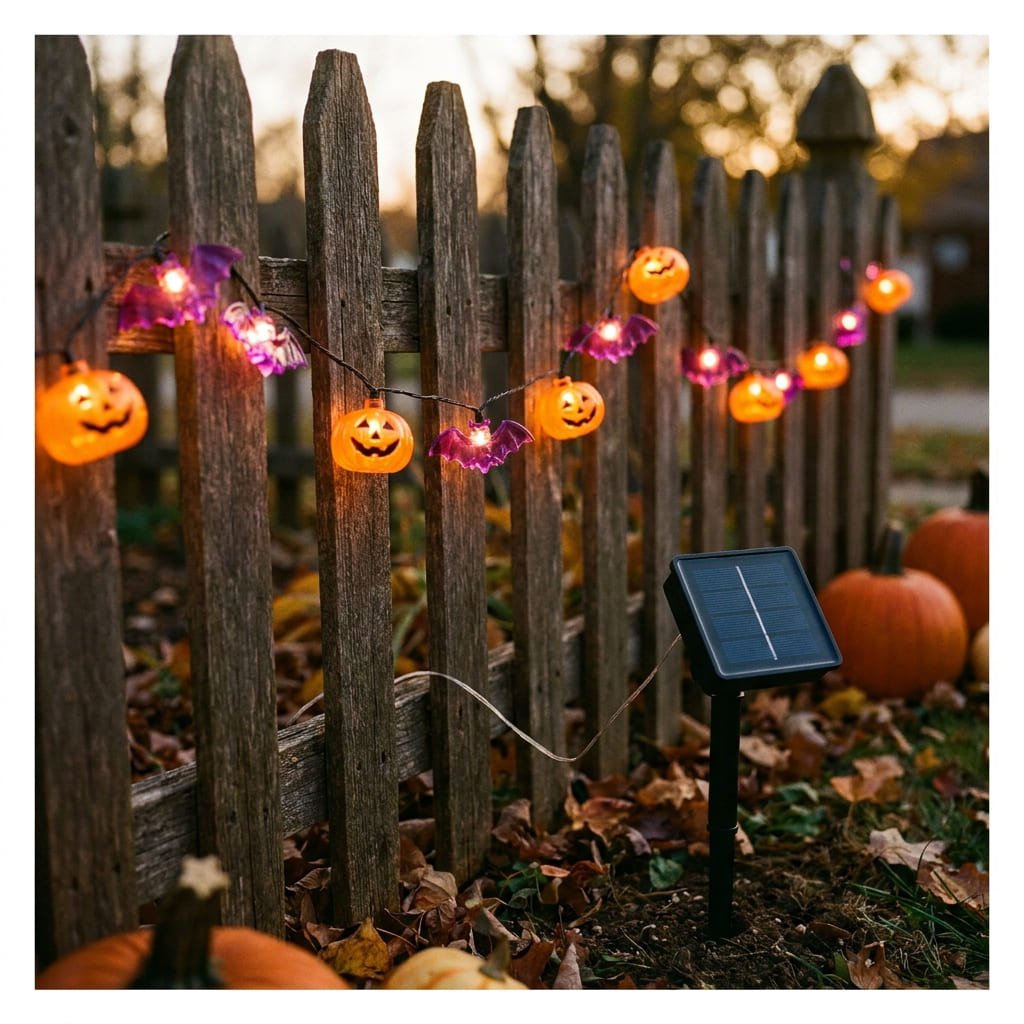
That’s a genuine, structural safety advantage, not just a convenience feature. It’s also worth being honest about what it doesn’t solve: our solar halloween lights review covers real limitations around autumn charging reliability and this specific product’s Ni-MH battery chemistry in cold weather, and none of that changes because the underlying electrical-fire risk is lower. A solar light being safer from an electrical-fire standpoint doesn’t make it more reliable as a light source — those are two separate questions worth evaluating independently.
It’s also worth noting what solar lighting doesn’t eliminate from the Halloween lighting safety picture. CPSC’s broader Halloween injury data shows falls while decorating account for a meaningful share of incidents, and that risk exists regardless of whether the lighting being installed is solar or plug-in. Reaching a ladder to hang string lights along a roofline carries the same fall risk either way; the electrical-fire advantage of a cordless product doesn’t extend to the physical act of installing it.
This Isn’t a Case Against Plug-In Lighting
It would be an overcorrection to read this as an argument that cord-based lighting is inherently unsafe, and that’s not what the CPSC data actually supports. The agency’s own guidance is entirely about condition and certification, not about avoiding electrical lighting altogether — a properly certified, undamaged, well-maintained string of plug-in lights is a reasonable and common choice, and millions of households use them without incident every year.
Our 60ft LED outdoor string lights review covers a mains-powered option directly, and the practical Halloween lighting safety takeaway there is straightforward: check the set for damage before each use, avoid daisy-chaining more strings than the product specifies, and keep outdoor cords rated for outdoor use specifically. Those three habits address the actual mechanism CPSC identifies far more directly than switching product categories entirely would.
Cost is worth mentioning honestly here too. A certified, well-maintained plug-in light typically costs less upfront than an equivalent solar-powered option, and for anyone with easy outlet access, that price difference isn’t offset by any meaningful electrical-fire-risk reduction if the plug-in product is properly inspected and maintained. The safety argument for solar lighting is strongest specifically for locations without convenient outlet access, not as a blanket recommendation over plug-in lighting everywhere.
Building a Genuinely Safer Halloween Lighting Setup
A reasonable approach to Halloween lighting safety probably isn’t “cordless only” or “plug-in only” — it’s matching the product to the location and being honest about maintenance. Our no-damage Halloween decorating guide already covers the property-damage side of this question; electrical fire risk is a related but distinct category worth layering on top of that thinking rather than replacing it.
For string lighting specifically, a solar option removes cord-related risk entirely for areas without convenient outlet access — exactly the kind of remote fence line or freestanding display our solar halloween lights review addresses. For areas with reliable outlet access where consistent nightly runtime matters more than cord elimination, a certified, well-maintained plug-in option covered in our 60ft LED outdoor string lights review remains a perfectly reasonable choice, provided the actual CPSC guidance on inspection and certification gets followed rather than skipped.
A simple annual habit covers most of the practical Halloween lighting safety guidance in one step: before the first use each season, unroll every string completely, plug it in briefly in a well-lit area (for plug-in sets) or check the solar panel and connections (for solar sets), and look specifically for cracked housings, exposed wire, or connectors that don’t seat firmly. Anything failing that quick check gets replaced rather than patched, which is exactly the standard CPSC’s own guidance describes.
Renters have an additional reason to care about this Halloween lighting safety distinction. Our renter friendly decorating guide already covers the property-damage angle of solar and other no-adhesive options, and the same cordless products that reduce wall and paint risk also happen to reduce a specific category of electrical fire risk, which is a reasonable bonus consideration for anyone weighing decorating choices in a rented space.
Where This Fits Into the Bigger Halloween Picture
Our Halloween spending roundup already covers this year’s national data showing decorating tied as the single most common way people actually celebrate the holiday. Lighting is a significant share of that decorating spend, which means Halloween lighting safety realistically affects a meaningful portion of households putting up any kind of exterior display this season, not just a small subset buying specialty products.
None of the products or approaches covered on this site are risk-free, and none of them need to be treated as such. The honest goal of thinking seriously about Halloween lighting safety isn’t eliminating every possible risk — it’s making an informed choice between genuinely different risk profiles, and maintaining whatever product you choose according to the actual guidance that exists for it.
Frequently Asked Questions
How many fires does CPSC actually attribute to holiday lighting specifically, and what does that mean for Halloween lighting safety? CPSC’s residential fire loss data associates electrical cords and plugs broadly with an average of 1,600 fires a year from 2017 through 2019. This isn’t broken out specifically by holiday lighting alone, but the agency’s own Halloween guidance explicitly addresses lighting as a decorating risk category.
Are solar Halloween lights actually safer than plug-in lights? From a specific electrical-fire standpoint, yes — removing cords, plugs, and outlet connections removes an entire category of failure points CPSC’s data associates with fires. That doesn’t make solar lighting universally better, since it comes with its own tradeoffs around charging reliability.
What does CPSC actually recommend for holiday lighting safety? Using only lights tested by a recognized testing laboratory, inspecting every set for cracked sockets, frayed wires, or loose connections before each use, and discarding any damaged sets rather than continuing to use them.
Is it unsafe to use plug-in Halloween lights at all? No. CPSC’s own guidance focuses on condition and certification, not on avoiding electrical lighting altogether. A certified, well-maintained plug-in product used according to its instructions is a reasonable and common choice.
Does Halloween lighting safety only matter for electrical fires? No — CPSC’s broader Halloween injury data shows falls while putting up or taking down decorations account for a meaningful share of injuries too, separate from the fire-specific electrical data discussed here.
The Bottom Line on Halloween Lighting Safety
Halloween lighting safety is a real, government-tracked category of risk, not a marketing talking point — 1,600 electrical fires a year is a meaningful number, and CPSC’s own guidance is specific about what actually causes them: damaged, uncertified, or poorly maintained lighting products. Cordless solar options genuinely remove a category of that Halloween lighting safety risk by design, but the honest takeaway isn’t that one lighting category is safe and the other dangerous — it’s that certification, condition, and maintenance matter more than which category you choose, and a little inspection before each use addresses the mechanism CPSC actually identifies.
This article reflects data and guidance published by the U.S. Consumer Product Safety Commission. It is not a substitute for reviewing current CPSC safety guidance directly before purchasing or using any seasonal lighting product.
[…] distinct risk categories worth thinking through separately when hosting for Halloween. Our Halloween lighting safety guide covers electrical and fire risk tied to holiday lighting specifically, and our Halloween pet safety […]
[…] ingestion hazards. For a detailed breakdown of low-voltage safety practices, check out our report on Halloween lighting safety CPSC data to secure your electrical […]
[…] bulbs, which matters for decoration safety independent of how the lights are powered. Our Halloween lighting safety guide already covers real CPSC data on decoration-related home fires, many of which involve a heat source […]
[…] To ensure optimal electrical safety, inspecting all battery compartments and wiring harnesses before installation is essential. Homeowners should verify that battery compartment doors are securely fastened with retaining screws, preventing small button-cell batteries from falling out. For detailed guidance on battery diode testing and electrical standards, consult our news analysis on CPSC Halloween Lighting Safety. […]
[…] pairing outdoor displays with low-voltage electrical elements, reviewing national guidelines on CPSC Halloween Lighting Safety provides essential protocols for outdoor-rated cords and weather-sealed battery housings. Ensuring […]