


According to official estimates from the U.S. Consumer Product Safety Commission (CPSC), there are over 14,000 holiday-related injuries treated in emergency departments nationwide each winter, emphasizing the urgent need for child-safe Halloween decorations. While seasonal styling brings immense joy to family spaces, active toddlers and pets turn loose ornaments into immediate ingestion and impact hazards. Selecting the right materials and styling zones allows parents to create a festive atmosphere without compromising family physical safety.
As families prepare their homes for autumn celebrations, understanding the mechanical properties of child-safe Halloween decorations becomes a primary safety responsibility. Many popular decorations contain small parts, chemical dyes, or heavy components that fail standard hazard tests when subjected to drops or bites. This guide will unpack national safety data and practical room-by-room display strategies to help you maintain a secure home environment this autumn.
Table of Contents
CPSC National Injury Data: The Reality of Holiday Decorating Risks
To understand the importance of choosing child-safe Halloween decorations, we must examine the specific patterns of seasonal injuries recorded by national public health databases. The CPSC National Electronic Injury Surveillance System (NEISS) tracks emergency room admissions and reveals that lacerations, fall injuries, and foreign body ingestions rise dramatically between September and November. Falling from ladders or chairs while mounting high-reach wall decorations represents the single most common cause of physical injury for adults during the holidays.
For children, however, the primary dangers are mechanical choking hazards and accidental poisonings from chemical finishes on decorative items. The U.S. Consumer Product Safety Commission’s Holiday Safety portal notes that small decorative attachments can easily break off fragile ornaments and block a young child’s airway, meaning that investing in child-safe Halloween decorations is a necessary precaution.
Additionally, we must consider the chemical risks associated with cheap import items sold online without proper safety certifications. Many resin and vinyl items contain heavy metals or unvetted paints that flake off when chewed by curious toddlers or pets, highlighting the value of child-safe Halloween decorations. By prioritizing certified eco-friendly resins and natural fibers, you significantly reduce the risk of chemical exposure in your active living areas.
The Material Matters: Shatter Profiles and Impact Safety
When evaluating child-safe Halloween decorations, the physical composition of each holiday accent determines its structural safety profile. Standard glass and glazed ceramics present a high risk because they shatter into razor-sharp shards when bumped from shelves by children or pets. In contrast, modern eco-friendly resin and heavy-bottomed composite plastics offer a dense, drop-resistant alternative that maintains its structural integrity under moderate impacts.
For completely risk-free styling, soft textiles and organic materials represent the gold standard of child-safe Halloween decorations. Items crafted from natural fibers, felt wool, or organic cotton cannot shatter, choke, or scrape even if they are pulled down by active hands. These soft items provide the same festive color and texture as heavy statues while remaining completely lightweight and non-hazardous.
Our comparative material matrix illustrates how common decorating substances perform against standard safety criteria. By analyzing drop resistance, choking potential, and chemical stability, we can make informed choices to find the best child-safe Halloween decorations for our living spaces this autumn:
| Decorating Material | Drop Resistance | Choking Potential | Chemical Stability | Overall Safety Grade |
|---|---|---|---|---|
| Glass & Glazed Ceramic | Extremely Low (shatters) | High (sharp shards) | High (stable inert glazes) | D (Unsafe for active rooms) |
| Eco-Friendly Resin | High (impact-resistant) | Moderate (small items) | High (non-toxic polymers) | B (Safe when styled high) |
| Felt Wool & Cotton | Outstanding (indestructible) | Low (soft fibers) | Outstanding (unbleached) | A+ (Excellent child-safe option) |
| Paper & Natural Wood | Moderate (tearable/splinter) | Low (biodegradable) | High (natural sealants) | A (Highly recommended option) |
Applying this material analysis directly to your home allows you to strategically place different item types based on their impact-shatter profiles to secure child-safe Halloween decorations. For example, fragile ceramic statues belong locked inside high-reach cabinets, while soft textile accents can safely decorate lower zones. This structured approach to material safety ensures that active play never results in a sharp shard injury.
Mechanical Hazards: Choking and the Small Parts Standard
A key technical standard for evaluating child-safe Halloween decorations is the federal small parts regulation, codified under 16 C.F.R. part 1501. This regulation bans children’s products intended for kids under three if they contain components that fit entirely within a standardized testing cylinder. This cylinder mimics the average dimensions of a young child’s expanded throat, meaning that any decorative piece fitting inside represents an active choking threat.
According to pediatric choking guidelines from Stanford Medicine Children’s Health, parents can use a simple cardboard tube to perform a practical hazard test to verify if their seasonal ornaments are indeed child-safe Halloween decorations. Any decorative accent or small ornament that passes cleanly through a standard toilet paper roll is too small to be displayed within reach of children under four years old. This quick check is a highly reliable way to audit your autumn tabletop figurines before distributing them throughout your home.
Furthermore, the Royal Society for the Prevention of Accidents (RoSPA) warns that seasonal novelties are legally classified as decorations rather than toys, reinforcing why we must carefully vet all child-safe Halloween decorations. This classification means they are exempt from strict toy-safety testing and frequently contain small detachable parts like loose beads or metal clips. Parents must assume that any unvetted novelty item carries a potential choking risk and keep it elevated out of a child’s grasp.
Flammability and Electrical Safety in Tabletop Displays
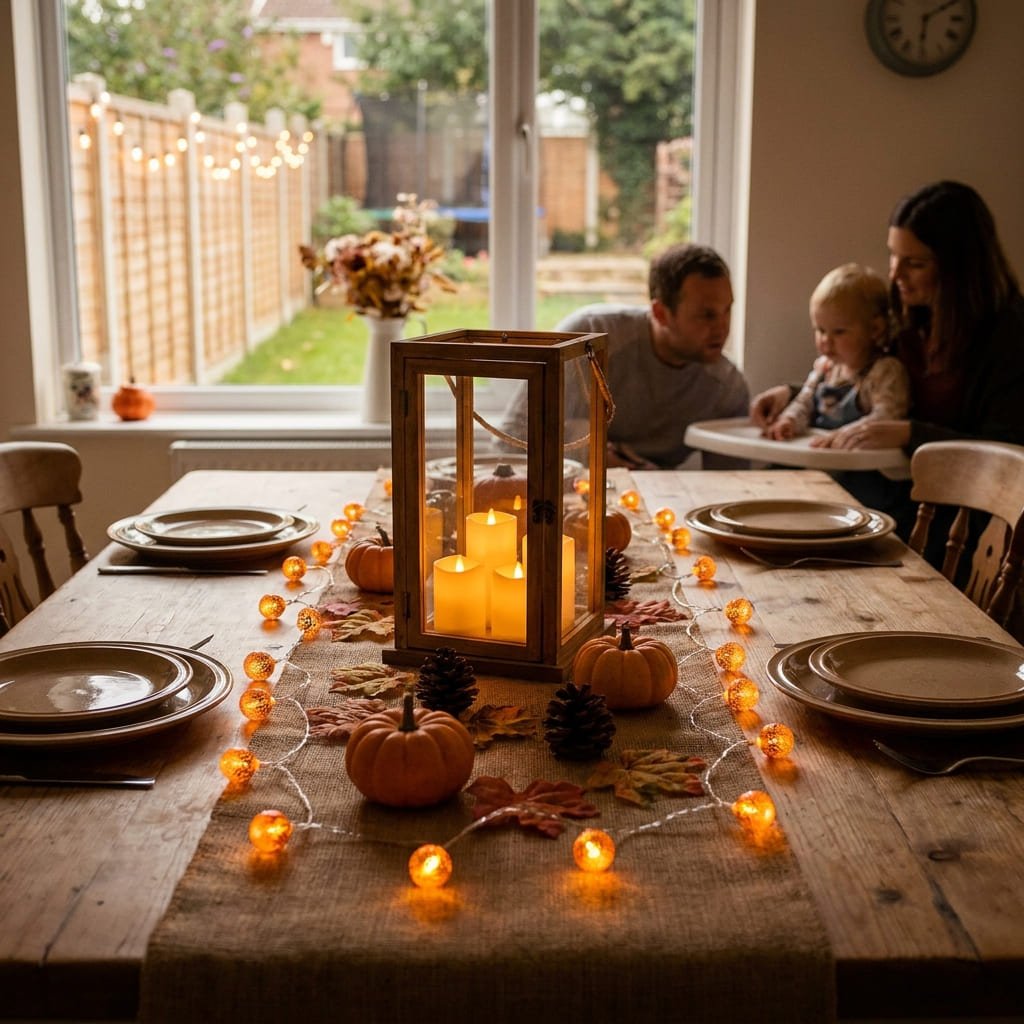
Tabletop lighting represents another critical safety vector when organizing child-safe Halloween decorations for your family room. The National Fire Protection Association (NFPA) reports that open-flame candles cause a significant percentage of home decoration fires, especially during peak holiday periods. Substituting traditional wax candles with low-voltage LED string lights or solar-powered ornaments dramatically reduces both burn and structural fire risks.
When utilizing electric lighting, always inspect the cords for frayed insulation, loose wires, or damaged plugs before plugging them into an outlet to ensure a baseline for child-safe Halloween decorations. The Consumer Product Safety Commission (CPSC) holiday safety guidelines recommend purchasing electrical decorations certified by independent testing laboratories like Underwriters Laboratories (UL). These certified lights undergo rigorous thermal testing to ensure they will not overheat or short-circuit during extended evening displays.
Additionally, battery-operated tea lights offer a highly secure way to illuminate carved jack-o’-lanterns on your front porch or dining table, maintaining the safety of child-safe Halloween decorations. However, parents must ensure that the battery compartments of these devices are tightly secured with a screw to prevent toddler access. Button batteries represent an extreme internal chemical burn hazard if swallowed and must be kept strictly inaccessible to young children.
Integrating Verified Safety Products Into Your Autumn Style
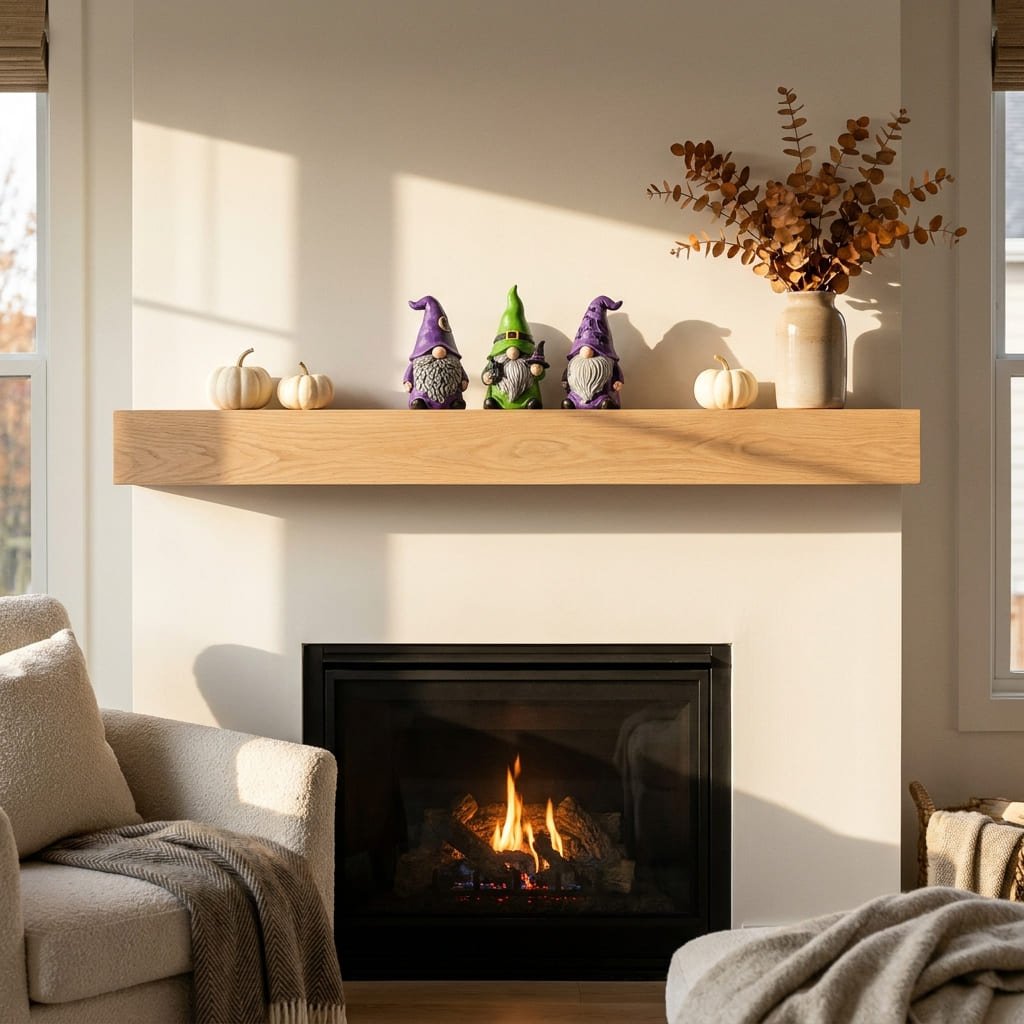
To help families implement these safety guidelines, we have reviewed several excellent items on our site that perfectly fit a child-safe Halloween decorations layout. For instance, in our deep-dive Scandinavian Halloween ornaments review, we analyzed a 3-piece set of handmade resin gnomes by Hodao. While these resin figurines are highly durable and drop-resistant, their three-inch size means they must be styled high on secure shelves out of reach of children under three.
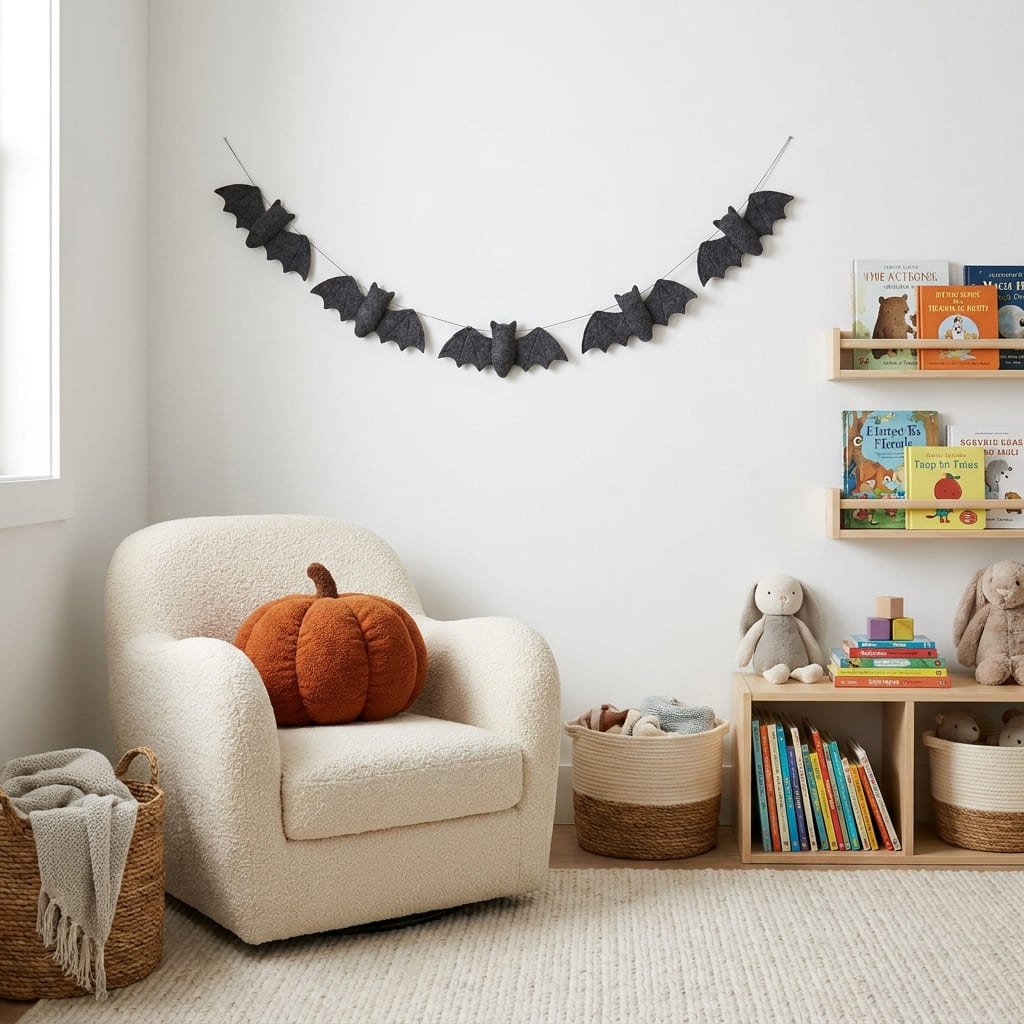
If you are looking for completely shatterproof, soft decorations for lower living zones, we highly recommend reading our felt bat garland review as an example of child-safe Halloween decorations. This lightweight fabric decoration is crafted from soft natural fibers and presents zero drop or impact hazards, making it perfect for kid-friendly spaces. You can easily pair it with cozy plush textures, as detailed in our comprehensive Halloween pillow covers review to build a comfortable and completely safe reading nook.
For festive lighting that bypasses the fire hazards of open flames, our solar Halloween lights review evaluates low-voltage, weather-resistant string lights that work perfectly to establish child-safe Halloween decorations. These low-risk alternatives keep electrical wires tucked away while providing excellent ambient illumination. Even your family companions can join the seasonal styling safely with lightweight, non-toxic accessories like those analyzed in our Halloween dog bandana review.
Active Spatial Planning: Safe Decorating Zones
Creating child-safe Halloween decorations in an active household requires dividing your living spaces into distinct vertical and horizontal safety zones. By understanding which areas are accessible to children and pets, you can distribute different decorating materials to minimize both impact and ingestion hazards. For a detailed breakdown of low-voltage safety practices, check out our report on Halloween lighting safety CPSC data to secure your electrical layouts.
We can divide our living spaces into three primary display zones, each suited to specific decorating materials based on their physical safety profiles to optimize our child-safe Halloween decorations strategy:
- The Upper High-Reach Zone (Mantels, Tall Bookshelves, Floating Shelves): This is the safest area for displaying heavier, rigid items like our eco-friendly resin gnomes or glass accents. It keeps them completely inaccessible to toddlers and pets, eliminating both fall-strike and choking risks.
- The Mid-Reach Transitional Zone (Dining Tables, Sideboards, Desks): This zone is perfect for lightweight wood and paper decorations. While moderately accessible, keeping items centered on wide tabletops reduces the likelihood of accidental bumps during active play.
- The Lower Child-Accessible Zone (Low Coffee Tables, Rugs, Floor Areas): This area must be reserved exclusively for soft textiles, felt garlands, plush pillows, and non-toxic materials. Even if a child pulls these items down, they represent zero physical impact or shatter hazards.
To learn more about chemical and biological safety in pet-and-child households, read our study on Halloween pet safety Purdue research to keep toxic seasonal items away from your family as you select child-safe Halloween decorations. When securing your decorations in high-reach zones, using damage-free adhesives and renter-friendly mounting techniques is crucial. Read our advice on renter friendly decorating Halloween for non-destructive anchoring methods that prevent heavy items from falling.
Additionally, organizing your home into structured display zones is a highly effective way to manage household traffic while displaying child-safe Halloween decorations. For practical styling strategies that align with your family’s daily movements, explore our guide on no damage Halloween decorating zones. This spatial framework ensures your home stays beautifully festive while maintaining clear paths and secure displays in high-traffic areas.
The Balanced Take: Aesthetic Style vs. Safety Realities
As parents design their seasonal spaces, they often face a genuine tension between high-end aesthetic styling and the strict safety demands of child-safe Halloween decorations. Traditional autumn design trends frequently highlight delicate glass pumpkins, real dried branches that splinter easily, and heavy metal candle holders. While these items look stunning in editorial photos, they represent significant physical safety hazards in homes with toddlers or energetic pets.
However, prioritizing safety does not mean your home must look sterile or devoid of festive charm when integrating child-safe Halloween decorations. The key is seeking high-quality substitutes that mimic the weight, texture, and visual appeal of traditional materials while offering high durability. Modern eco-friendly resin figurines, thick unbleached cotton runners, and premium wool felts allow you to achieve a sophisticated Scandinavian aesthetic that remains completely child-safe.
Furthermore, styling represents a dynamic compromise that shifts as your family grows, showing that implementing child-safe Halloween decorations is a long-term journey. Temporary sacrifices in display areas (such as keeping coffee tables completely clear) are brief phases that protect your children during their most curious developmental years. Embracing this balance allows you to enjoy a beautiful, warm, and secure home that celebrates the season without unnecessary emergency room risks.
Frequently Asked Questions
How do I check if my holiday tabletop ornaments are child-safe Halloween decorations?
To check if your ornaments qualify as safe seasonal items, apply the standard four-centimeter small parts test. You can pass each small decorative piece through a cardboard toilet paper roll to verify its size. If the ornament fits completely inside the tube, it represents an active choking hazard and must be styled in high-reach zones out of reach of children under three years old.
Are eco-friendly resin figurines safer than traditional ceramic items?
Yes, eco-friendly resin is significantly safer for secure holiday accents because it possesses a much higher drop resistance than glass or glazed ceramics. While a ceramic figurine will shatter into razor-sharp shards when dropped, a solid resin figurine is impact-resistant and will not break under standard drop forces, preventing cuts and glass injuries.
Can I use real candles in a house with toddlers and pets?
No, real candles with open flames are not recommended for child-proof autumn decor due to the high risk of burns and structural home fires. The National Fire Protection Association reports that candle fires are highly preventable, and recommends substituting open flames with low-voltage LED tea lights, battery-operated candles, or solar-powered lights.
How do I secure heavy tabletop decor on furniture?
To keep heavier tabletop items safe, mount them on high-reach furniture like mantels or floating shelves using museum wax or non-destructive gel adhesives to maintain protective seasonal decorations. These damage-free anchoring methods prevent curious toddlers or pets from pulling decorations down, ensuring your home remains a low-risk environment during seasonal celebrations.
What is the safest material for low-reach holiday displays?
The safest materials for low-reach areas are soft, natural fabrics such as felted wool, organic cotton, and linen, which are highly recommended for family-safe holiday displays. These soft textiles are inherently shatterproof and choke-free, making them the ultimate choice for accessible decorating zones where young children and pets play daily.
The Bottom Line on Child-Safe Seasonal Styling
Designing a festive, warm, and secure home during the autumn holidays is completely achievable through strategic material choices and active spatial zoning to curate low-risk decorating choices. By replacing fragile glass and open flames with drop-resistant eco-friendly resins and low-voltage LED lighting, you create a beautiful space that protects your entire family.
Remember to test your small tabletop accents using the simple four-centimeter rule, and elevate any potential choking hazards to high-reach shelves and secure mantels. This structured approach ensures that your autumn celebrations remain filled with joy, peace, and uncompromising physical safety.