

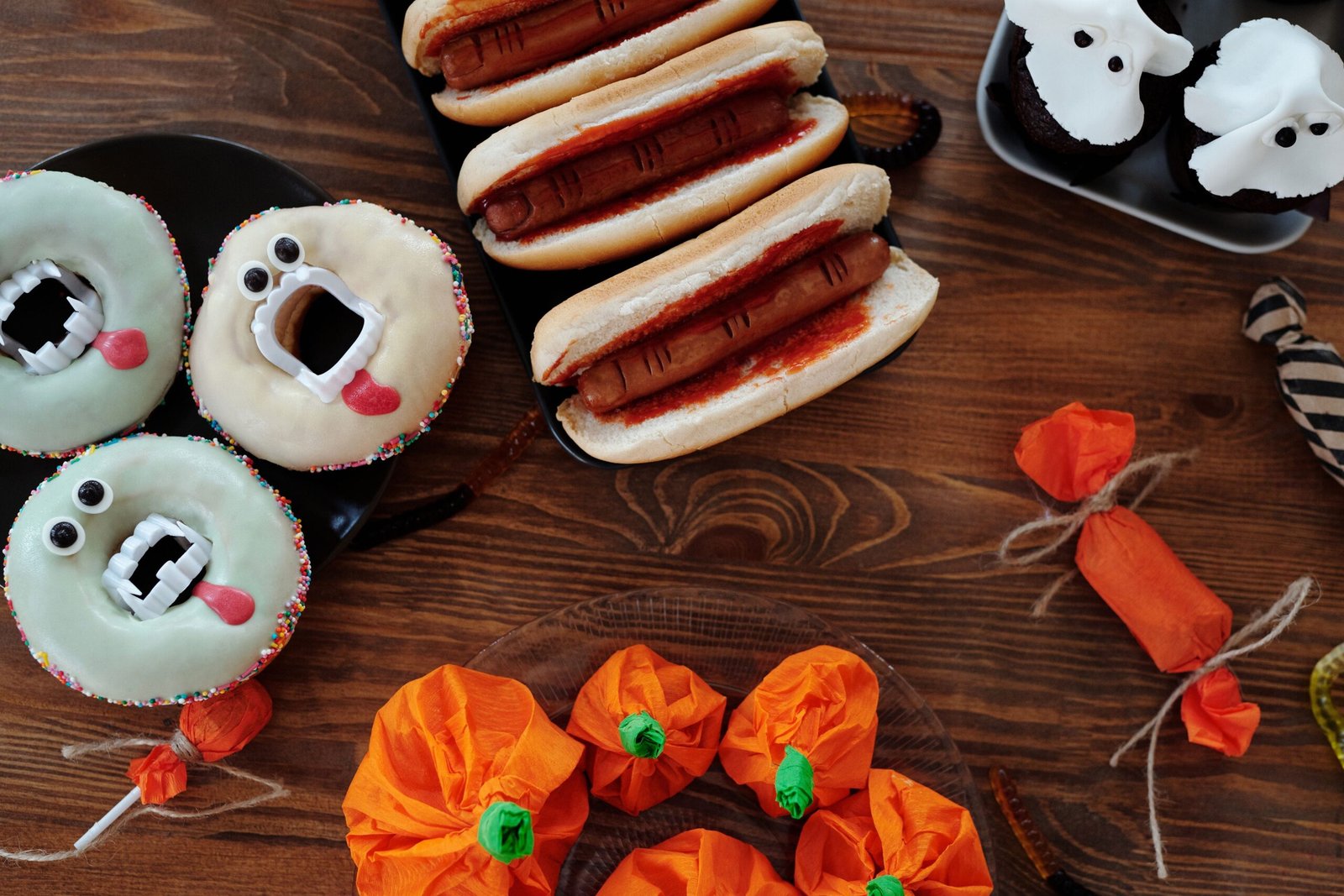
Every year, an estimated 48 million Americans get sick from foodborne illness, according to CDC data cited in USDA’s own party food safety guidance — with 128,000 hospitalized and 3,000 deaths. Halloween food safety matters specifically because a Halloween dinner or party, with food sitting out on a table for hours while guests mingle, is exactly the kind of setting where the specific mechanism behind that risk shows up.
This isn’t a Halloween-specific hazard in the sense that it only happens on one day of the year, but the format of a typical Halloween gathering — a buffet-style spread, a party that runs for hours, guests coming and going for trick-or-treating — creates conditions that line up closely with the exact scenario federal food safety guidance is designed to address. Understanding the actual mechanism behind Halloween food safety, rather than a vague sense that “food shouldn’t sit out too long,” makes the guidance far more actionable.
Table of Contents
The Real Science Behind Halloween Food Safety and the 2-Hour Rule
According to the USDA, bacteria multiply exponentially in what’s known as the “Danger Zone” — temperatures between 40°F and 140°F — doubling in number every 20 minutes. That’s the reasoning behind the Two-Hour Rule at the heart of good Halloween food safety practice: perishable food left at room temperature for more than two hours should be discarded, regardless of how it looks or smells.
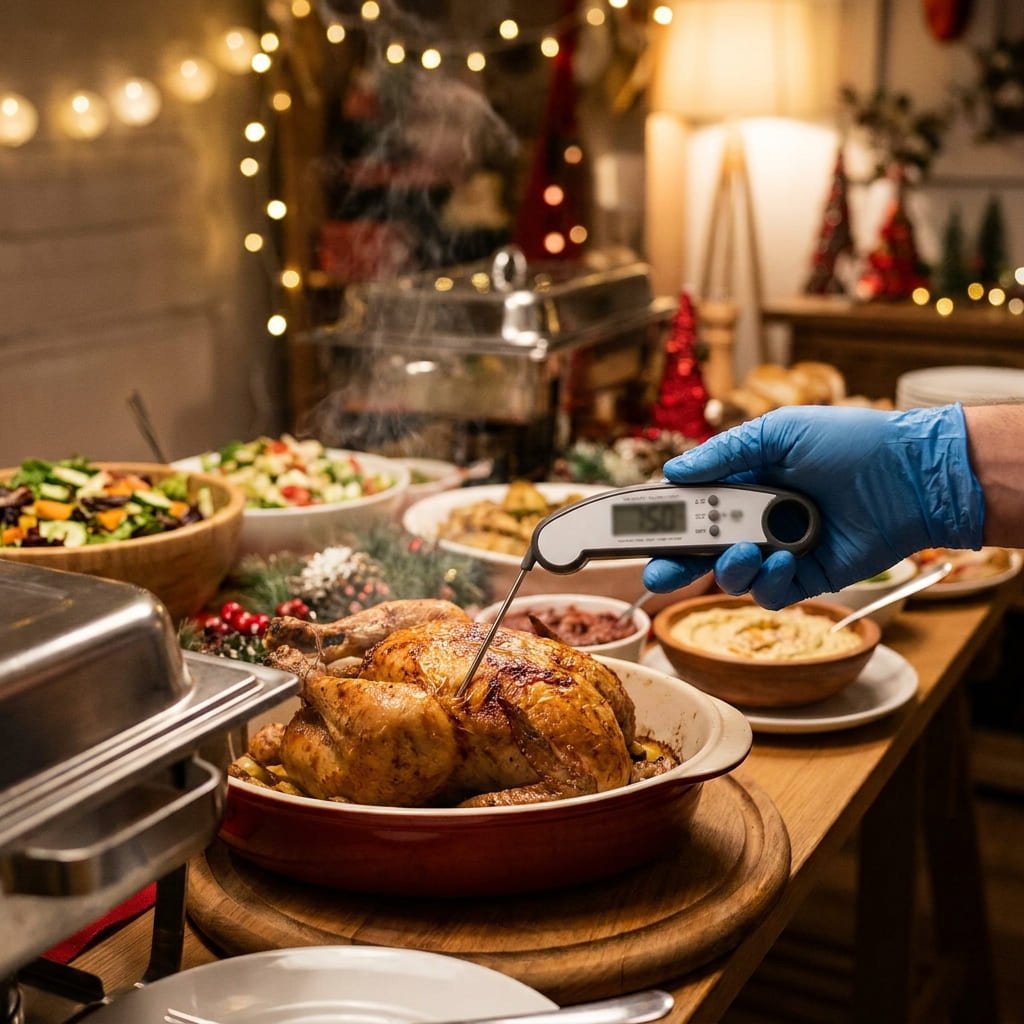
This isn’t a vague suggestion. The FDA’s own buffet safety guidance is explicit that hot foods need to stay at 140°F or above and cold foods at 40°F or below, with a food thermometer as the only reliable way to check — not visual inspection. A dip, a platter of deli meats, or a tray of appetizers sitting at room temperature on a Halloween party table starts accumulating risk from the moment it’s set out, not just once it looks obviously spoiled.
The doubling-every-20-minutes detail is worth sitting with for a moment, since it explains why the risk accelerates rather than growing at a steady pace. A small, manageable bacterial population at the start of a party can become genuinely hazardous well before the two-hour mark if conditions favor rapid growth, which is part of why the FDA frames the Two-Hour Rule as a maximum rather than a target to aim for.
The 1-Hour Halloween Food Safety Exception for Warmer Gatherings
The Two-Hour Rule gets stricter in warmer conditions. Both USDA and FDA guidance specify that if a buffet is held somewhere the temperature is above 90°F — an outdoor Halloween gathering in a warmer climate, for instance — the safe holding time drops to just one hour. That’s a meaningful difference for anyone hosting outside or in an unusually warm space, and it’s easy to overlook if the Two-Hour Rule is the only guidance a host remembers.
This exception matters more for Halloween food safety specifically than it might for other fall holidays, given how much Halloween hosting genuinely happens outdoors — a driveway or porch setup for handing out candy and hosting a small gathering simultaneously, or a backyard party in regions where late October afternoons still run warm. Checking the actual outdoor temperature during the event, rather than assuming fall weather automatically means cooler conditions, is a reasonable habit for anyone planning Halloween food safety around an outdoor setup specifically.
Practical Halloween Food Safety for Your Party Table
The FDA’s guidance includes a specific tip directly relevant to any Halloween party table setting: don’t add new food to an already-filled serving dish. Instead, replace nearly empty dishes with freshly filled ones, since guests’ hands can contaminate a dish that’s been sitting out, and topping it off doesn’t reset that risk. Keeping buffet portions smaller and refreshing them throughout the party, rather than filling one large dish at the start, is a genuinely useful practical habit.
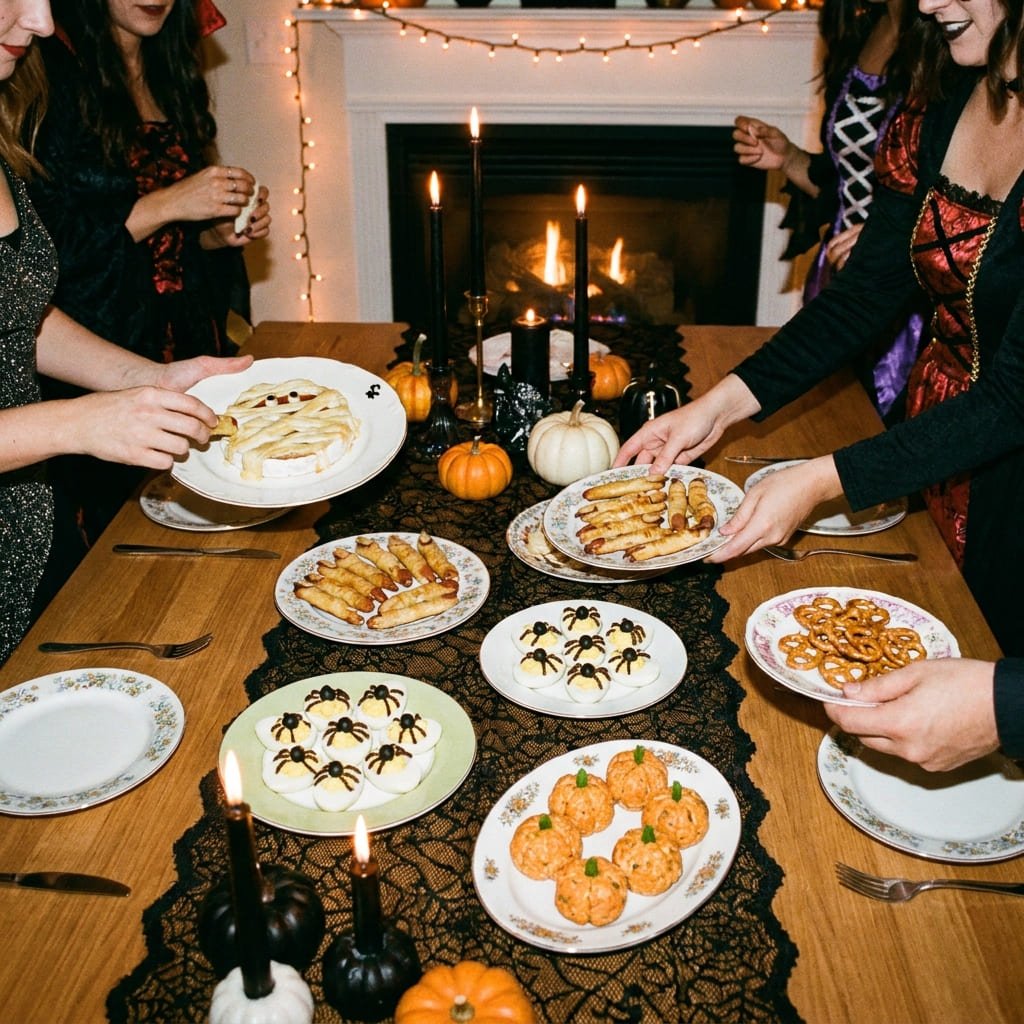
This “size matters” approach, as FDA guidance frames it, solves two problems at once for Halloween food safety. Smaller, more frequently refreshed portions reduce the total time any single batch of food spends in the Danger Zone, and they also reduce the handling-related contamination risk that accumulates as more guests reach into the same dish over the course of an evening. Preparing several smaller platters ahead of time, with cold backups refrigerated and hot backups held in a low oven, means late-arriving guests get food that’s just as fresh as what early arrivals received.
Our Halloween table runner review already covers the physical setting where a lot of this food actually gets served, including a related but distinct safety consideration: keeping open flames a safe distance from flammable table linens. Food safety and fire safety are two separate risk categories that both happen to converge on the same piece of furniture during a Halloween dinner, which makes the dinner table itself a reasonable place to think through both at once rather than address them separately.
The Four Basics of Halloween Food Safety: Clean, Separate, Cook, Chill
USDA’s food safety framework boils down to four steps worth applying specifically to Halloween-season foods. Clean means washing hands and surfaces before and after handling food — genuinely more relevant at a Halloween gathering where guests might be wearing gloves as part of a costume, handling face paint, or touching various shared surfaces before reaching for food. Separate means keeping raw meat, poultry, and eggs away from anything ready to eat, using different cutting boards and never placing cooked food on a plate that held raw ingredients.
Cook means using a food thermometer rather than color or texture to confirm safety — ground meats to 160°F, whole cuts of beef, pork, lamb, and veal to 145°F with a rest period, and poultry to 165°F. Chill means refrigerating perishables within two hours of cooking or purchasing, or within one hour if it’s above 90°F, and never thawing food at room temperature on a counter.
These four steps of Halloween food safety are worth thinking of as a sequence rather than four independent tips, since a failure at any single step undermines the ones around it. Thoroughly cooked chicken that then gets placed back on the same cutting board used for raw chicken has effectively been re-contaminated after the cooking step already did its job — which is exactly why the Separate step exists as a distinct category rather than being folded into Clean or Cook.
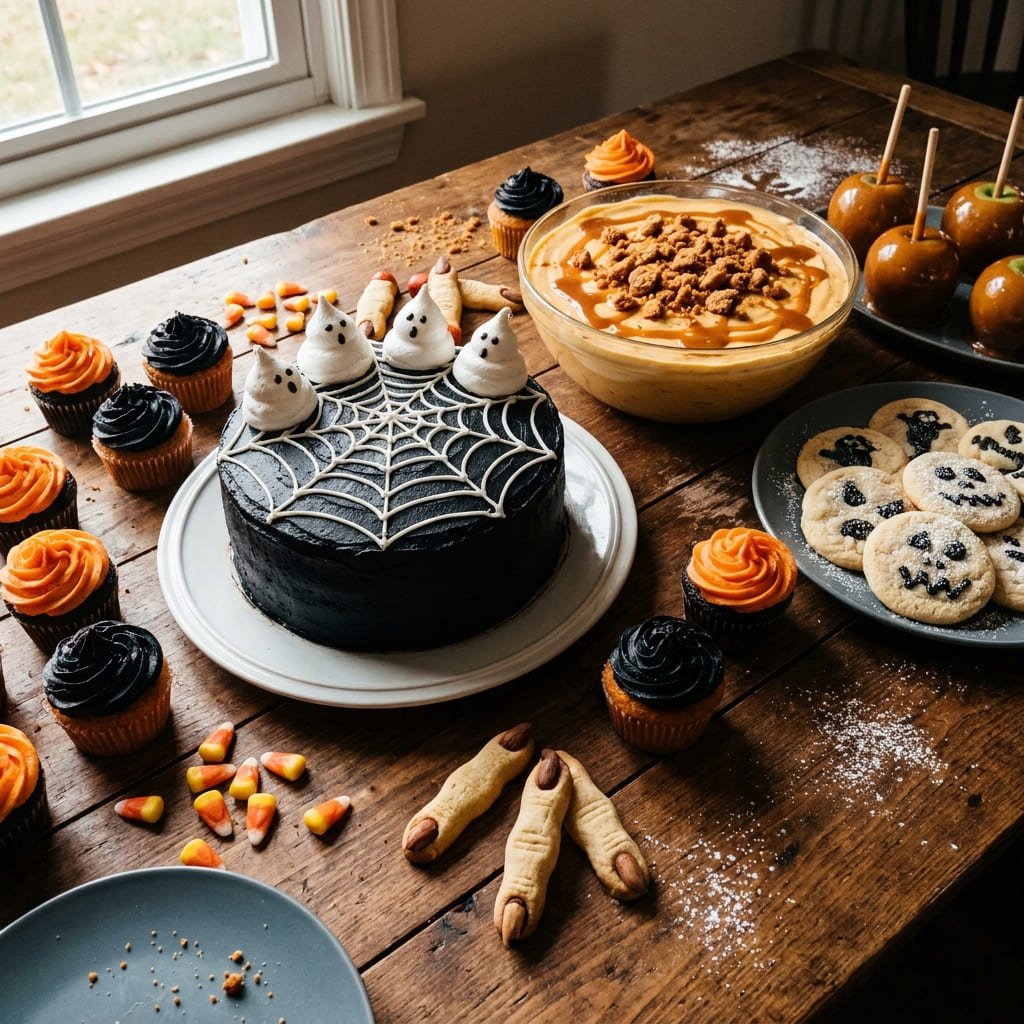
Halloween-specific recipes deserve a specific mention here too for anyone thinking through Halloween food safety carefully. Homemade treats involving raw or lightly cooked eggs — certain frostings, custards, or a homemade eggnog-style drink for an adult gathering — carry a documented risk that’s easy to overlook in a festive context. FDA guidance recommends heating any egg-and-liquid mixture to 160°F on a food thermometer, or using pasteurized eggs specifically, rather than relying on traditional recipes that were written before this guidance was well understood.
This risk applies specifically to recipes where eggs never reach a fully cooked state, which is more common in Halloween-season baking and treat-making than people often realize. A batch of homemade cookie dough meant to be eaten raw as a novelty treat, or a no-bake dessert that relies on raw egg for texture, falls into exactly the category FDA guidance is warning about — genuinely worth a substitution or a pasteurized-egg swap rather than skipping the precaution because the recipe feels traditional or low-risk.
Where Halloween Food Safety Connects to Other Safety Considerations
Food safety is one of several genuinely distinct risk categories worth thinking through separately when hosting for Halloween. Our Halloween lighting safety guide covers electrical and fire risk tied to holiday lighting specifically, and our Halloween pet safety guide covers the genuine escape and candy-toxicity risks pets face during trick-or-treating hours — none of which overlap directly with Halloween food safety, but all of which are worth planning around during the same event.
Our Halloween spending roundup already covers how much households spend on Halloween overall, and hosting a gathering — food, drinks, decor — is a meaningful part of that broader spending category. None of these safety considerations require treating Halloween hosting as more complicated than it needs to be; they’re simply worth knowing about ahead of time rather than discovering them the hard way partway through a party.
Taken together, these separate safety guides map onto the actual physical experience of hosting a Halloween gathering fairly closely: a decorated table with linens and possibly a lit centerpiece, food served buffet-style over several hours, pets somewhere in the house reacting to a steady stream of trick-or-treaters at the door. Each of those elements carries its own specific, well-documented risk category, and addressing Halloween food safety alongside fire safety and pet safety individually is more effective than a single generic “be careful” mindset applied across all of them at once.
Frequently Asked Questions
What is the Two-Hour Rule for Halloween food safety specifically? Perishable food left out at room temperature for more than two hours should be discarded, according to USDA and FDA guidance, since bacteria multiply rapidly in the 40°F to 140°F “Danger Zone.”
Does the Two-Hour Rule change for outdoor Halloween parties, from a Halloween food safety standpoint? Yes. If the temperature is above 90°F, the safe holding time drops to one hour instead of two, according to both USDA and FDA guidance.
Is it safe to add fresh food to a serving dish that’s already been sitting out? No. FDA guidance specifically recommends replacing nearly empty serving dishes with freshly filled ones rather than topping off a dish that’s already been out, since bacteria from guests’ hands can contaminate food already on the table.
What temperature should Halloween party food be cooked to? Ground meats should reach 160°F, whole cuts of beef, pork, lamb, and veal should reach 145°F with a rest period, and poultry should reach 165°F, confirmed with a food thermometer rather than color or texture.
Are homemade Halloween treats with raw eggs safe to serve, from a Halloween food safety standpoint? Only if the egg mixture is heated to 160°F on a food thermometer, or made with pasteurized eggs specifically. Traditional recipes using raw or lightly cooked eggs carry a documented risk for guests at higher risk of foodborne illness.
The Bottom Line on Halloween Food Safety
Halloween food safety comes down to genuinely simple, well-documented guidance that’s easy to overlook in the middle of hosting: watch the clock, use a thermometer instead of guessing, and replace serving dishes rather than topping them off. None of this requires elaborate preparation — it requires knowing the actual rules ahead of time, which is exactly what USDA and FDA guidance lays out clearly for anyone hosting a Halloween gathering this year.
Treating Halloween food safety as a short, memorable checklist rather than a long list of rules makes it considerably easier to actually apply during a busy evening of hosting. The Two-Hour Rule, a food thermometer, and replacing rather than topping off serving dishes cover the vast majority of the practical risk discussed here, without requiring a host to memorize every detail of USDA and FDA guidance in full.
None of this guidance is unique to Halloween specifically — it applies to any gathering where food sits out over an extended period. What makes it worth restating in a Halloween-specific context is simply that the typical format of a Halloween party or dinner — hours-long, buffet-style, often involving guests moving in and out for trick-or-treating — creates exactly the conditions this guidance was written to address, making it more relevant here than it might be for a shorter, more tightly scheduled gathering.
This article on Halloween food safety reflects publicly available food safety guidance from the U.S. Department of Agriculture and the U.S. Food and Drug Administration, cross-referenced against CDC’s foodborne illness burden estimates. It is not a substitute for consulting current official food safety guidance directly, particularly for guests at higher risk of foodborne illness.