

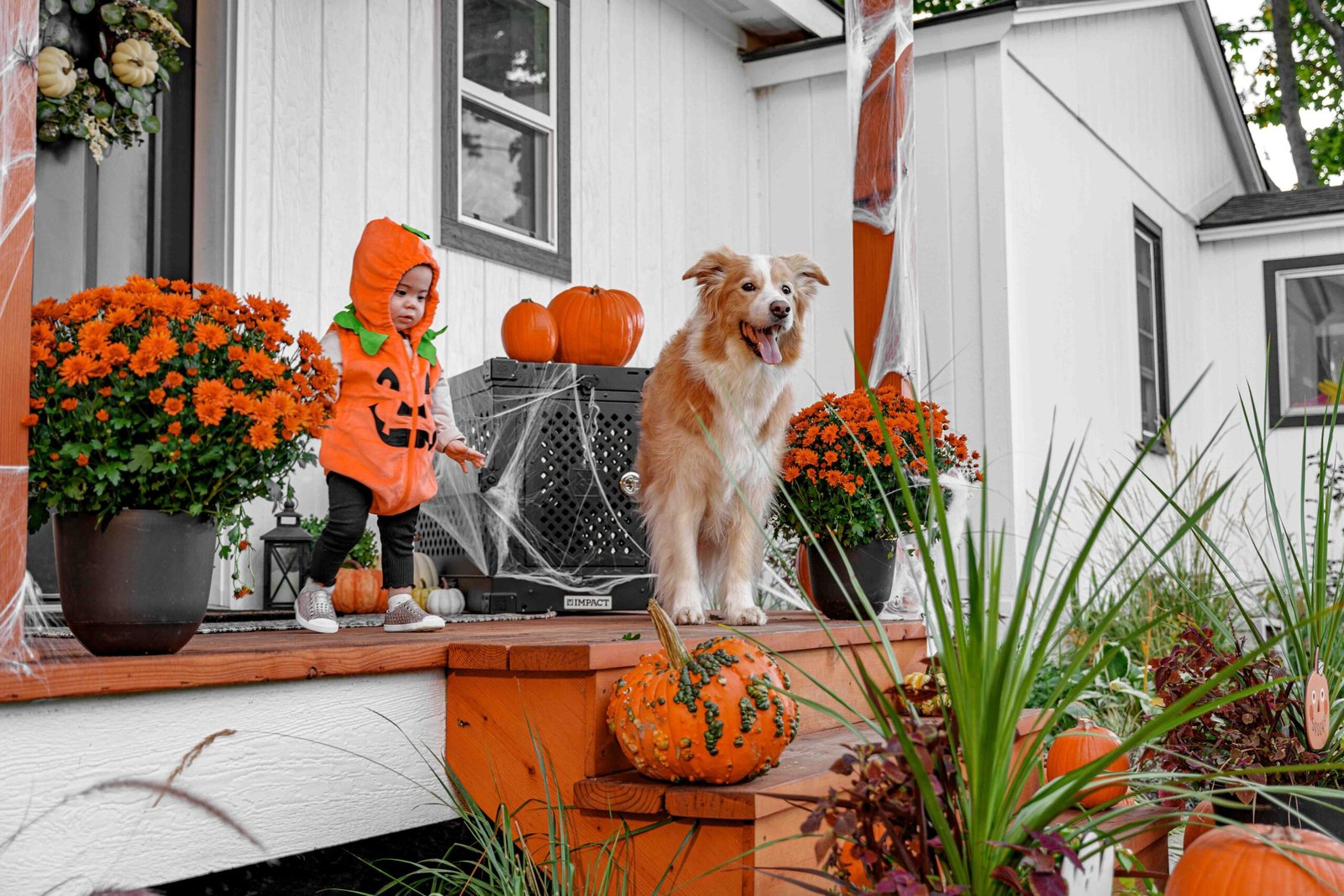
Most Halloween pet safety advice focuses on vague warnings about “loud noises” and “stress.” Researchers at Purdue University’s Center for Animal Welfare Science point to something far more specific: it’s the simple act of repeatedly opening the front door to hand out candy that actually drives most Halloween pet escapes. That mechanism, plus a second, separate risk around candy and chocolate, are worth understanding in concrete terms rather than general caution.
This distinction matters more than it might initially seem for good Halloween pet safety planning. General advice to “keep your pet calm” during Halloween doesn’t give an owner anything specific to change about their evening, while identifying the door itself as the actual trigger points toward concrete, testable interventions — which is exactly what a legitimate animal behavior research team is positioned to offer that a general safety checklist typically isn’t.
Table of Contents
Why Pets Actually Go Missing on Halloween: The Halloween Pet Safety Mechanism
According to Candace Croney, director of Purdue’s Center for Animal Welfare Science, and her research team, the most likely reason pets go missing during Halloween is straightforward: opening doors frequently to hand out candy to trick-or-treaters makes pet escapes more likely. Constant doorbell ringing and strangers knocking can startle cats and dogs, and in a panic, some pets try to escape the situation entirely by bolting through the open door.
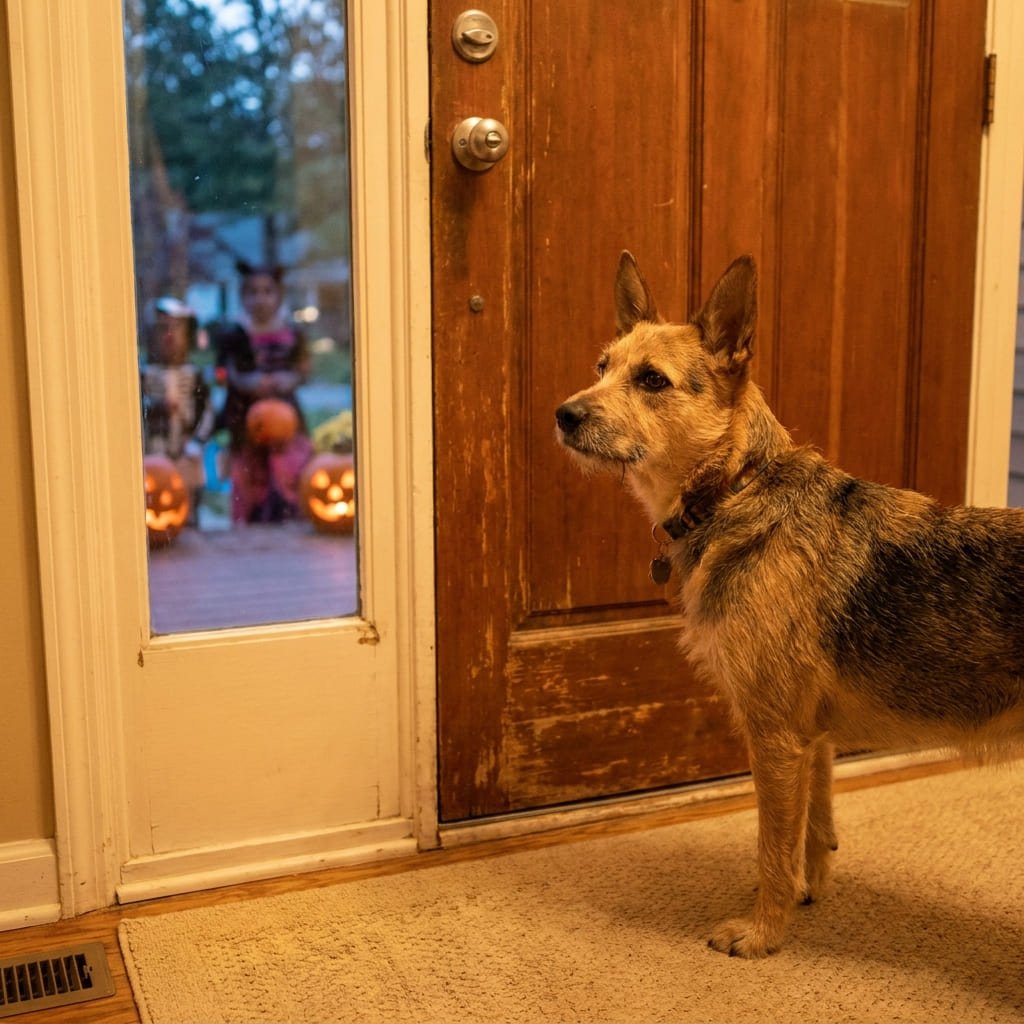
The team’s recommended fix is specific and low-effort: set up a sanctuary space for your pet during trick-or-treat hours, ideally somewhere already familiar and comfortable, stocked with a bed, water, food, and a litter box if needed. Even pets who normally spend time outdoors are better off brought inside for the night, since a fenced yard isn’t necessarily escape-proof for a genuinely distressed animal.
Croney’s team also points to a practical alternative to the doorbell-and-open-door cycle itself: sitting outside on the porch or front step to greet trick-or-treaters directly, weather permitting, or using a video or silent doorbell that sends a phone alert instead of an audible chime. Either approach removes the specific trigger — the repeated opening of the door in response to sound — rather than just hoping the pet tolerates it.
This is a meaningfully different framing from the general “keep pets calm” advice that circulates widely around Halloween pet safety. Rather than asking a pet to simply tolerate a stressful evening, removing or reducing the actual trigger event addresses the root mechanism the research identifies, which is a more reliable Halloween pet safety strategy than hoping calmness holds up under repeated startling.
The Independent Case Against Costumes: A Second Halloween Pet Safety Source
This is where the Purdue research directly reinforces something we’ve already covered elsewhere on this site. Our Halloween dog bandana review covers RSPCA guidance recommending a bandana over a full costume, and Purdue’s own research team arrives at the same conclusion independently: “the team strongly encourages pet parents to forgo pet costumes,” specifically recommending a properly fitted holiday collar or bandana instead.
The reasoning Purdue’s team gives lines up closely with the RSPCA’s own hazard list. Costumes can restrict a pet’s movement, sight, hearing, or even breathing if too tight, while oversized costumes increase the risk of tripping or catching a limb or claw. There’s also a specific risk that doesn’t always come up in general costume advice: loose costume material catching on furniture indoors or on trees and shrubs outdoors, which can trap a frightened pet and make an already stressful situation considerably worse.

Having two independent sources — an animal welfare nonprofit and a university animal behavior research center — land on the same specific recommendation is a stronger signal than either alone. Neither organization has any commercial stake in bandana sales, which makes the convergence worth taking seriously rather than dismissing as a coincidence.
It’s worth being specific about what “independent” means here for Halloween pet safety purposes, since it’s doing real work in this argument. The RSPCA is an Australian animal welfare charity; Purdue’s Center for Animal Welfare Science is a U.S. university research center with no connection to the RSPCA at all. Two organizations on different continents, operating in entirely different institutional contexts, reaching the identical practical conclusion is a meaningfully different kind of evidence than a single source repeating the same advice twice.
The Second Halloween Pet Safety Risk: Candy and Chocolate Toxicity
Halloween pet safety isn’t only about escape risk. Purdue’s guidance is direct about candy specifically for good Halloween pet safety practice: keep it out of a pet’s reach entirely, in a bowl on a high counter, inside a cabinet, or even in the refrigerator, and cover the container if your pet is capable of reaching countertops.
If a pet does get into chocolate or other candy, the guidance is to call a veterinarian or the Pet Poison Helpline immediately rather than waiting to see what happens. Common signs of toxicity include vomiting, diarrhea, decreased appetite, and excessive drooling, along with behavioral changes like unusual lethargy or hyperactivity. Any of these signs after a pet has had access to Halloween candy warrants an immediate call rather than a wait-and-watch approach.
This risk exists independently of the escape risk covered above, and addressing one doesn’t automatically address the other. A pet safely contained in a sanctuary room during trick-or-treating still needs candy kept genuinely out of reach, since Halloween candy tends to be more present throughout the house that particular week than any other time of year.
The timing of when candy accumulates in a household is worth thinking about specifically for Halloween pet safety. Halloween candy doesn’t arrive all at once the way a single grocery trip would — it builds up gradually as trick-or-treaters’ leftover bags, decorative bowls near the door, and the household’s own stash all coexist for days before and after the actual holiday. That extended window is part of why candy-related incidents aren’t limited to the single evening of trick-or-treating itself, and why a one-time check on Halloween night isn’t sufficient on its own.
Building a Safer Halloween Pet Safety Setup
Combining Purdue’s guidance into a practical Halloween pet safety checklist: confirm microchip registration is current and collar identification is up to date before Halloween evening, set up a sanctuary room stocked with familiar essentials, consider a doorbell alternative or porch-side greeting setup to reduce the number of times the door actually opens, and store candy somewhere genuinely inaccessible rather than just out of immediate sight.

For pets who do enjoy participating in Halloween activities, Purdue’s team notes that restricting them to a quiet room isn’t always necessary — but monitoring for stress signals still matters. Watch for continuous barking, whining, or growling in dogs that isn’t typical for them, or hissing, hiding, puffed-out fur, and a curved, lowered posture in cats. Any of these signals means it’s time to move the pet to a quieter space, regardless of how the rest of the evening is going.
Microchip registration deserves a specific Halloween pet safety callout, since it’s the single item on this list most likely to be forgotten simply because it doesn’t need annual renewal like some other pet care tasks. A microchip that’s never been registered, or was registered years ago with an outdated phone number or address, provides essentially none of its intended benefit if a pet actually goes missing — checking and updating this information takes a few minutes online and is worth doing well before Halloween evening, not as a last-minute step.
Our cat bat wings costume review covers a fuller costume option for pet owners still considering that route, and it’s worth reading alongside this research rather than in isolation, given how directly Purdue’s team addresses the costume question specifically.
Where This Connects to Other Halloween Products and Decor
None of this Halloween pet safety guidance exists in a vacuum from the broader decorating decisions covered elsewhere on this site. Our Halloween spending roundup covers this year’s national data on how much households are spending on Halloween overall, and pet-related purchases — costumes, bandanas, treats — are a growing share of that broader category as pet ownership and pet-focused celebration have both increased.
Exterior decorating choices matter for Halloween pet safety too, in a less obvious way than costumes or candy. A yard or porch with unfamiliar new decorations, sudden movement from wind-triggered pieces, or unfamiliar lighting can itself become a source of stress for a pet that’s already on edge from doorbell activity, compounding the exact escape risk Purdue’s research identifies. Keeping a pet’s usual outdoor route as consistent as possible during the days surrounding Halloween, rather than introducing brand-new decorations right along a path they regularly use, is a small additional step worth considering alongside the sanctuary-room approach.
This is also a reasonable moment to think about decorations from the pet’s perspective specifically for Halloween pet safety purposes, not just the human visitor’s. A decoration that looks charming to a trick-or-treater walking past might read very differently to a dog or cat who encounters it suddenly in a space they consider their own territory — introducing anything genuinely new to a pet’s regular outdoor area a few days before Halloween, rather than the same evening, gives them time to habituate to it before the added stress of trick-or-treating activity begins.
None of this requires a specialized product or an elaborate setup to implement. Most of what Purdue’s research points toward — a quiet room, an updated microchip, a stored-away candy bowl, a bandana instead of a costume — is either free or already something most pet-owning households have on hand, which is part of why it’s worth treating as genuinely actionable rather than aspirational advice.
Frequently Asked Questions
What’s the actual reason pets go missing on Halloween, and how does this affect Halloween pet safety planning? According to Purdue University’s Center for Animal Welfare Science, the most likely cause is the repeated opening of the front door to hand out candy, which creates opportunities for a startled or anxious pet to bolt outside.
Do veterinary researchers actually recommend against pet costumes for Halloween pet safety reasons? Yes. Purdue’s animal behavior research team explicitly recommends against full costumes, citing risks like restricted movement, breathing, or vision, and the possibility of costume material catching on furniture or outdoor plants. They recommend a properly fitted collar or bandana instead.
What should I do if my pet eats Halloween candy? Call your veterinarian or the Pet Poison Helpline immediately rather than waiting for symptoms. Signs of toxicity include vomiting, diarrhea, decreased appetite, and excessive drooling.
Is it better to keep pets inside during trick-or-treating? Research from Purdue recommends setting up a familiar, comfortable sanctuary space indoors, including for pets that normally spend time outdoors, since a fenced yard isn’t necessarily escape-proof for a genuinely distressed animal.
Are there alternatives to using a doorbell during trick-or-treating? Yes — sitting outside on a porch or step to greet trick-or-treaters directly, or using a video or silent doorbell that sends a phone alert instead of an audible chime, both reduce the specific door-opening trigger Purdue’s research identifies.
The Bottom Line
Halloween pet safety comes down to two genuinely separate, well-documented risks: the escape risk created by repeated door-opening, and the candy and chocolate toxicity risk that exists independently of it. Purdue’s research gives a specific, actionable mechanism behind the escape risk rather than vague noise-related caution, and its independent recommendation against costumes — landing on the same bandana-over-costume conclusion as animal welfare guidance covered elsewhere on this site — is a meaningfully stronger signal than either source would be alone.
Neither risk requires an elaborate Halloween pet safety solution. A sanctuary room, an updated microchip, a genuinely inaccessible candy stash, and a bandana instead of a full costume address the specific mechanisms this research identifies far more directly than a vague instruction to “keep pets calm” ever could.
This article reflects research and guidance published by Purdue University’s Center for Animal Welfare Science. It is not a substitute for consulting your veterinarian about your individual pet’s needs.
[…] safety guide covers electrical and fire risk tied to holiday lighting specifically, and our Halloween pet safety guide covers the genuine escape and candy-toxicity risks pets face during trick-or-treating hours — […]
[…] learn more about chemical and biological safety in pet-and-child households, read our study on Halloween pet safety Purdue research to keep toxic seasonal items away from your family as you select child-safe Halloween decorations. […]