


High tech toilet features have moved from luxury hotels in Tokyo to the wishlist of every high-end homeowner and interior designer planning a bathroom remodel. If you want to avoid regret, overspending, or installation headaches, this guide arms you with the most up-to-date 2024 market data, actionable buying steps, and the hard questions other articles skip.
Key Takeaways
- 2024 market shows explosive growth in smart toilets—with high tech toilet features like integrated bidets, self-cleaning, and AI personalization driving value for homeowners and specifiers.
- Installation and maintenance pitfalls are under-researched—demand manufacturer proof, detailed install specs, and validated warranties before buying.
- For the best ROI and user experience, request lab-tested cleaning performance, robust IoT security documentation, and clear after-sales service guarantees.
Table of Contents
Global and U.S. Market Snapshot for Smart Toilets in 2024
The demand for high tech toilet features has hit critical mass in 2024. Estimates place the global smart toilet market at USD 6.2B to USD 9.68B, with projections like USD 11.7B by 2030 (9.4% CAGR) or USD 31.5B by 2034 (12.75% CAGR) [source].
North America led with around 40% of global revenue (about USD 3.03B), and the US now has 8.2 million installed units—showing true momentum for the market. Luxury buyers care because these numbers signal robust resale value, a future-proof upgrade, and strong long-term manufacturer support.
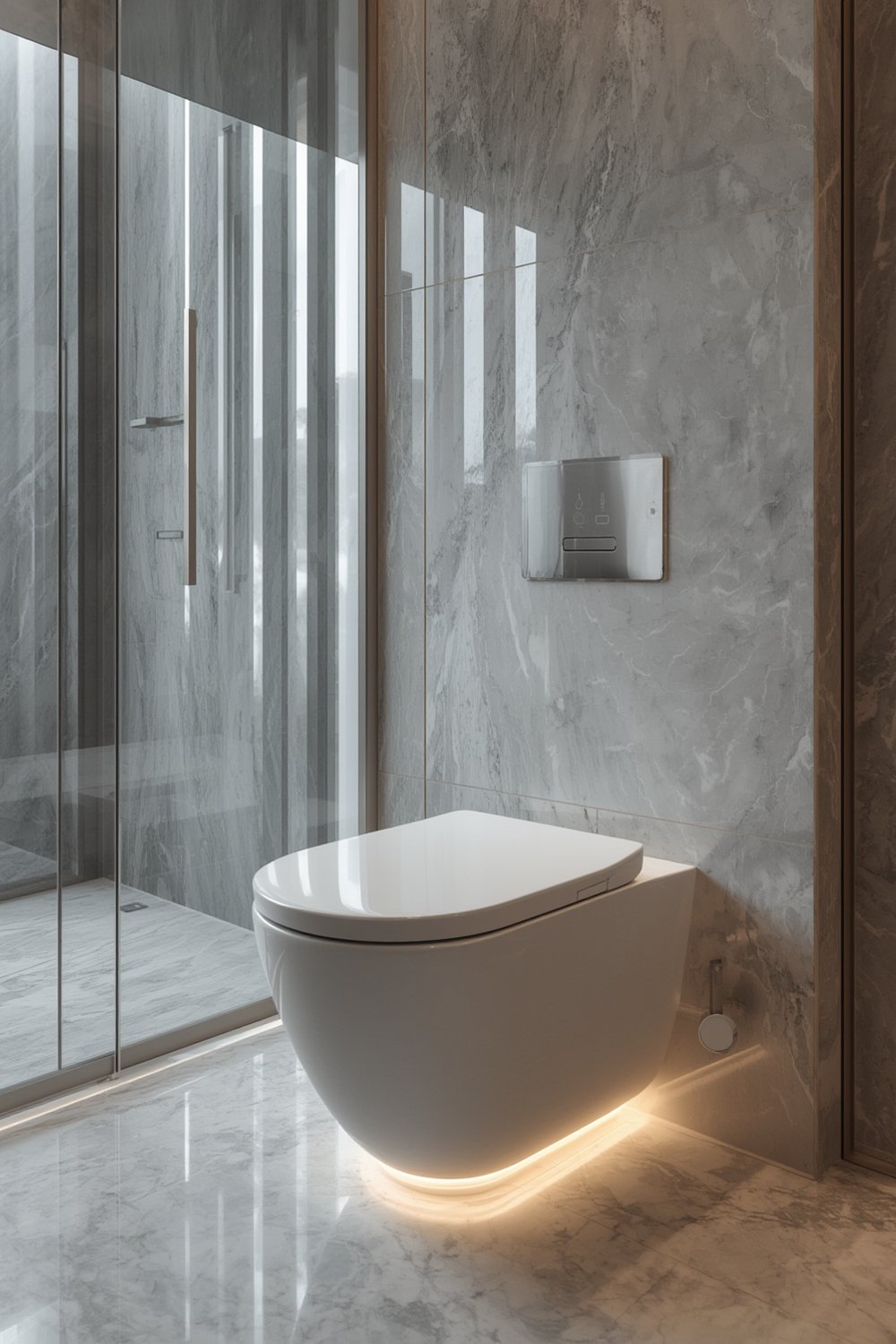
Most smart toilets feature a bidet, heated toilet seat, self cleaning toilet modes, touchless flush, and Wi-Fi-app integration. Brands leading in 2024 include TOTO, Kohler, Lixil, Villeroy & Boch, Roca, Brondell, and Duravit. Market growth is fueled by hygiene awareness, smart home integration, water-saving tech, and the appeal of Japanese toilet technology’s “spa experience.”
Quick fact: The fully automatic smart toilet segment alone is valued at $2.3B globally, underlining the mainstreaming of premium features like a bidet toilet combo [source].
High Tech Toilet Buying & Installation Guide
Buying a smart toilet with bidet is easy if you plan the key steps below. This 2024 guide highlights exactly what smart buyers and specifiers should confirm—using gaps in published research as action triggers.
- Identify usage needs and technical fit: For home, hospitality, or healthcare, confirm if high tech toilet features like motion sensor flush or medical diagnostics are required.
- Get technical: Ask manufacturers for:
- Nozzle pressure range (PSI/Bar),
- Adjustable water and seat temperatures (°F/°C),
- Nozzle material and anti-microbial coatings,
- Auto-clean cycles and flush volumes (GPF/Liter),
- Electrical load (peak/standby watts) and GFCI requirement,
- App/remote capabilities and data privacy documentation.
These are absent from most public research, so direct manufacturer proof is critical.
- Price anchors: Per-unit 2024 prices for a heated toilet seat, bidet toilet combo, or full automatic toilet are rarely disclosed in research. Get direct quotes and clarify what features add cost (AI, premium finishes, IoT security, install complexity).
- Installation: Vet your installer’s experience with Japanese toilet technology, retrofits, and self cleaning toilet systems. Ensure compatibility with your site’s electric and water supply, especially in older homes. Verify service/warranty coverage.
- Request proof: Always demand cleaning efficacy (independent lab or third-party), durability, IoT security, and installation support ratings—since research repeatedly lacks aggregated pain-point or service failure data.
- Sustainability: Ask about water/energy usage, filter/cartridge lifespans, and eco certifications for specifier or builder documentation.
- Compare brands: Shortlist TOTO, Kohler, Lixil, Villeroy & Boch, Roca, Brondell, and Duravit. Ask every manufacturer for up-to-date certifications and independent security audits—especially for smart toilet with bidet features and medical monitoring.
Not sure how to set a luxury bathroom budget? Cross-reference your fixture wish list with recent ADU construction cost data and remodeling trends to avoid cost overruns.

Looking at wellness and cleanliness? Research ties bidet functions (adjustable spray, air-dry, water disinfection, and warm seats) directly to enhanced hygiene and reduced skin irritation, but actual clinical data is mostly manufacturer-supplied [source]. For seniors planning aging in place bathroom upgrades, highlight the wellness safety and touchless operation benefits.
Still debating between retrofitting and full replacement? Retrofit kits offer basic bidet features and heated toilet seats, but lack advanced self cleaning toilet mechanisms, high durability, and AI security layers.
Advanced Analysis & Common Pitfalls
Many luxury buyers learn too late that high tech toilet features come with unique pitfalls no one tells you about until installation or maintenance time. Here’s what our research-based approach reveals—and what’s still missing from published data.
| Feature/Aspect | Potential Pitfall | Research Gap | Buyer Action |
|---|---|---|---|
| Installation (Bidet Toilet Combo, Automatic Toilet) | Requires dedicated GFCI, water-pressure compatibility, possible floor reinforcement | No aggregate user pain-point/install failure data | Get detailed install specs; demand installer experience with smart toilets |
| Maintenance (Self Cleaning Toilet) | Nozzle cleaning, filter changes, software glitches possible | No public maintenance-trouble statistics | Ask for maintenance guides and warranty coverage up front |
| Smart Features (Privacy/Data) | Medical monitoring raises privacy/IoT security concern | Very few third-party audits published | Demand security audit summaries for any app-connected model |
| Cleaning Effectiveness | Self-cleaning mechanisms not always as effective as claimed | No comparative cleaning/lab performance published | Ask for lab test results and independent certifications |
| Retrofit vs. Full Replacement | Retrofits may lack advanced tech, lower durability | No long-term durability studies available | Choose full models for heavy use and high-spec needs |
Self cleaning toilet systems use methods such as electrolyzed water, UV sterilization, rimless bowls, and antimicrobial nozzles—but the industry has not published head-to-head metrics comparing them to traditional cleaning. Until this changes, prioritize models with third-party lab documentation and extended warranties.
For energy and water consumption analytics, few brands document usage details in public reports. If you’re creating an energy-efficient home or commercial project, verify these numbers directly.
Don’t forget sustainability: market reports confirm water-saving tech as a major driver, but you must document actual use for ROI or regulatory needs.

For a deeper look at air quality priorities in modern bathrooms, see our HEPA air purifier review—and note the trend of combining ventilation upgrades with state-of-the-art fixtures.
Conclusion
2024 marks a turning point where high tech toilet features are a defining luxury for private homes, hotels, and care facilities. Don’t just choose the flashiest bidet toilet combo—demand comprehensive spec sheets, validated cleaning/warranty proof, and real installation support. If you want maximum comfort, hygiene, and resale ROI, start conversations with brand technical reps today, and bring your project designer or contractor clear, documented feature checklists before any purchase.
Ready to specify, budget, or install? Take the checklist above to your preferred supplier and insist on technical proof before you commit.
Frequently Asked Questions
Are bidet toilet combos and smart toilets really more hygienic than traditional toilets?
Yes, several studies and technical reports suggest that smart toilets with bidet functions, water disinfection, and touchless controls do improve personal hygiene over traditional paper-only cleaning—especially when combined with high-pressure, adjustable sprays. However, head-to-head lab comparisons remain limited and often manufacturer-supplied.
Is installation disruptive or complex for a high tech automatic toilet?
Installation can be straightforward in new builds but often tricky in retrofits. Many automatic toilets require dedicated electrical outlets (preferably GFCI for safety), specific water pressure, and proper floor support. Always consult with experienced installers and review technical requirements before purchase. The lack of user-complaint data in research means diligence is essential.
Does the self-cleaning feature replace manual cleaning completely?
No. Self cleaning toilet features like rinsing, UV, or electrolyzed water reduce the need for frequent scrubbing but do not fully replace occasional manual cleaning. Since the industry lacks published comparative cleaning-effectiveness stats, always verify cleaning capability through independent reports.
How private is my data with medical-monitoring smart toilets?
Most leading brands state that user data from health-monitoring features is encrypted and private, but few publish third-party IoT security audits. Always ask your provider for documentation before connecting any device to apps or networks.
What factors most increase the cost of a luxury smart toilet?
Primary drivers include integrated bidet tech, multi-stage self-cleaning, advanced AI/personalization, premium materials (ceramic, stainless), and app/remote controls. Installation complexity and warranty scope also affect total cost. Per-unit price ranges are not widely published—get direct written quotes before committing.