

Every synthetic decoration eventually gets thrown away, and what happens after that point is a genuinely different story depending on what it’s made of. According to a peer-reviewed study published in Water, Air, & Soil Pollution, wool fibers biodegrade in marine environments with no evidence of leftover non-degraded residue, while synthetic fibers used in similar applications persist far longer. Natural fiber decor and synthetic decor aren’t just different in feel and cost — they behave completely differently once they’re no longer wanted.
This distinction rarely comes up in seasonal decorating advice, which tends to focus entirely on price, appearance, and durability while a purchase is in active use. What happens to a decoration years later, once it’s finally discarded rather than reused, is a separate question that genuine peer-reviewed research actually has something specific to say about.
Table of Contents
The Real Research on Microplastic Pollution From Natural Fiber Decor and Synthetic Textiles
Synthetic textiles are a documented, ongoing source of microplastic pollution. According to research hosted by the National Institutes of Health, a single laundry cycle can release between 120 and 730,000 microfibers into domestic wastewater, depending on the fabric and washing conditions. Those fibers make their way into wastewater systems and, from there, into aquatic environments where synthetic microplastics are now well-documented as a persistent form of pollution.
This research was conducted specifically on apparel textiles being laundered repeatedly, which is a meaningfully different scenario than most natural fiber decor or synthetic seasonal decorations, which typically aren’t washed anywhere near as often as clothing. But the underlying material behavior — what happens to synthetic fibers once they’re released into the environment, whether through laundering or eventual disposal — is the same regardless of how the fiber got there in the first place.
The wide range in that 120-to-730,000 figure is itself informative. Fabric construction, fiber type, and washing machine settings all influence how many fibers actually shed during a single cycle, meaning the specific textile matters considerably more than a single average number could capture. What stays consistent across the range, though, is that these are genuinely synthetic plastic fragments entering the water system — not a natural fiber that will eventually break down.
Why Natural Fiber Decor Behaves Differently at the End of Its Life
The Water, Air, & Soil Pollution study specifically tested wool against a range of synthetic fibers using a simulated marine environment, following an established biodegradation testing method. The results were clear: wool, including a chemically treated shrink-resistant variety, showed no evidence of generating non-degraded plastic-like residue. A separate peer-reviewed composting study found a similar pattern in soil conditions, ranking biodegradability from fastest to slowest as viscose rayon, machine-washable wool, untreated wool, and then nylon, polyester, and polypropylene — with the synthetic fibers remaining completely intact at the end of the test period.
That’s a meaningful, evidence-backed distinction for anyone thinking about natural fiber decor specifically. Wool, cotton, and other natural fibers used in decorations eventually break down into their constituent organic materials. Synthetic fibers — polyester, acrylic, nylon — don’t break down in any comparable way; they simply fragment into progressively smaller pieces of plastic that persist in the environment for a very long time.
The composting study result is worth sitting with specifically, since it directly tested the kind of end-of-life scenario that matters most for discarded decor. Rather than measuring performance during use, researchers measured what actually happened to each fiber type once it was treated as waste and exposed to the microbial activity present in composting conditions. The synthetic fibers weren’t partially broken down or slower to degrade — they remained essentially unchanged, which is the clearest possible demonstration of the practical difference discussed here.
What This Means for Natural Fiber Decor and Seasonal Halloween Decor Specifically
This research matters for natural fiber decor decisions in a way that’s slightly different from how it applies to clothing. Most seasonal decorations, whether natural or synthetic, don’t get laundered dozens of times a year the way worn clothing does — the ongoing microfiber-shedding-during-washing research applies less directly here. What matters more for decor specifically is end-of-life disposal: what eventually happens to a decoration once it’s discarded, whether that’s after years of reuse or after a single disappointing season.
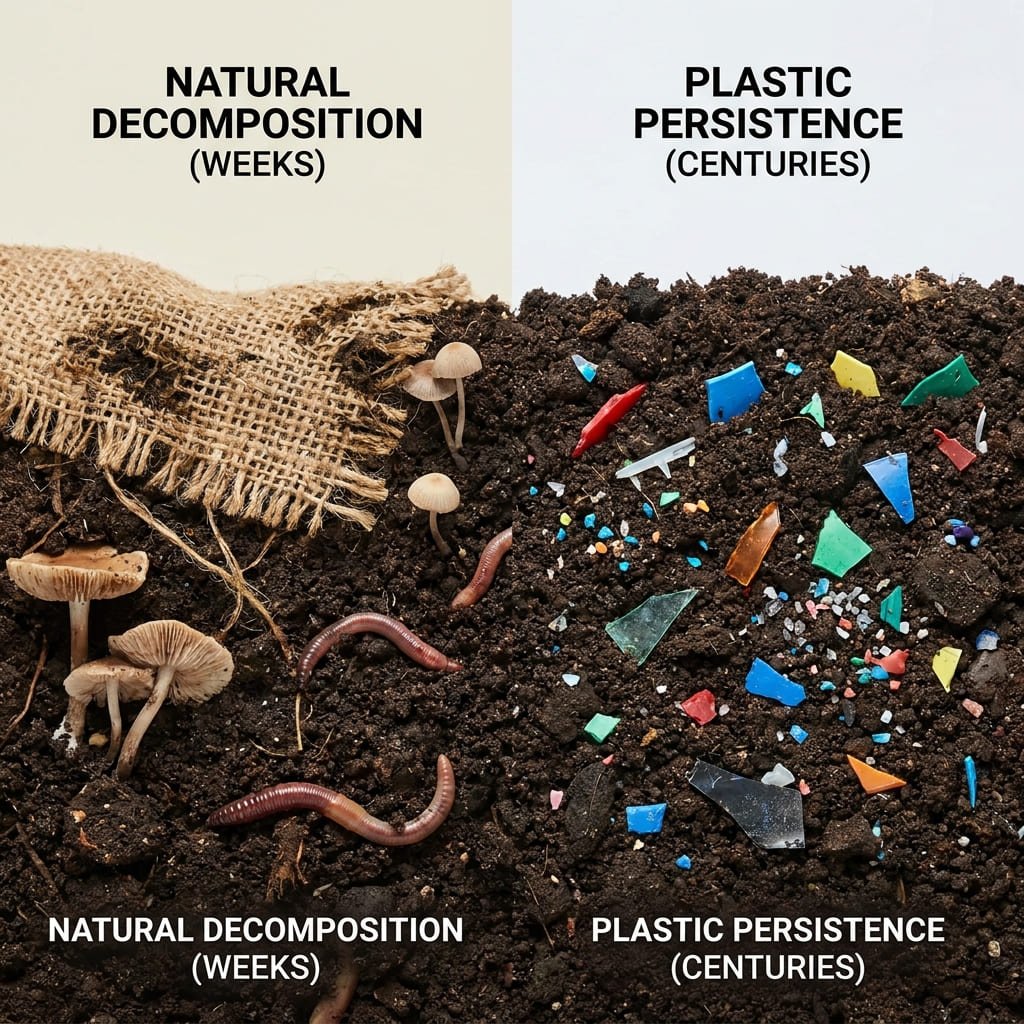
A natural fiber decor item that eventually ends up in a landfill or breaks down outdoors follows the same biodegradation pathway the research describes — it returns to organic material over time. A synthetic decoration in the same situation doesn’t disappear in any comparable sense; it persists as plastic, gradually fragmenting rather than breaking down, for a timeline measured in decades rather than years.
This distinction is particularly relevant for natural fiber decor used seasonally, since Halloween decor in particular tends to have a shorter practical lifespan than everyday household textiles. A design trend shifts, a piece gets damaged, or a household simply wants a different look next year, and the previous season’s decorations end up discarded well before they’ve physically worn out. That earlier-than-expected disposal timeline means the end-of-life material behavior discussed here applies to seasonal decor arguably sooner, on average, than it would to more durable household goods kept in continuous use for a decade or more.
Where This Connects to Other Natural Fiber Decor and Halloween Choices
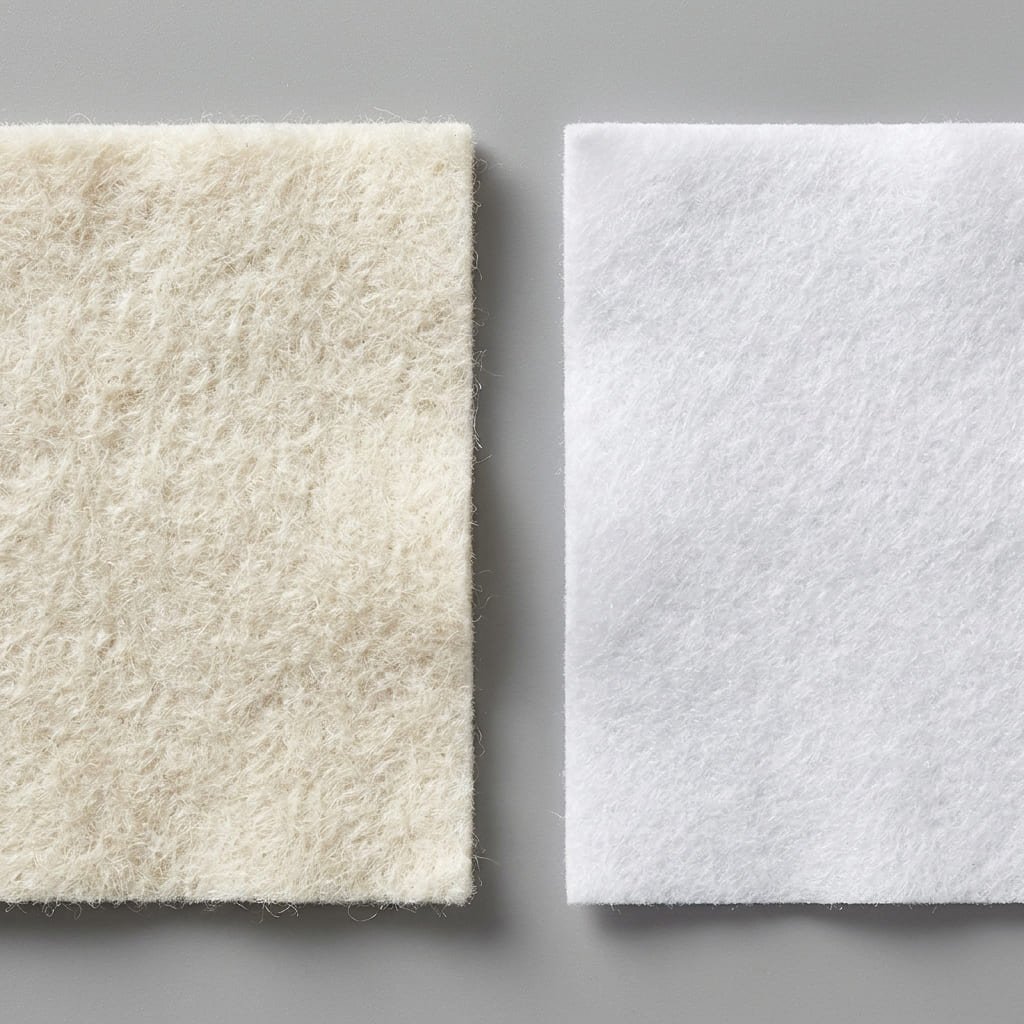
Our felt bat garland review already covers a genuine wool felt product, and the material distinction discussed there — wool needing different care than synthetic felt — connects directly to this broader environmental research. The practical care difference and the environmental end-of-life difference both stem from the same underlying fact: wool is a natural, biodegradable protein fiber, and synthetic felt isn’t.
It’s worth being honest about a real tension here rather than glossing over it. Our Halloween throw blanket review recommends a fleece throw specifically for its warmth, low-maintenance care, and plush feel — genuine, legitimate advantages. But fleece is a synthetic, typically polyester fabric, which means it falls on the persistent, non-biodegradable side of the research discussed here. That’s not a reason to reverse the recommendation in that review, since fleece’s practical advantages are real and the item in question isn’t being laundered anywhere near as often as the apparel tested in the underlying research — but it’s a genuine tradeoff worth naming honestly rather than ignoring simply because it complicates an earlier recommendation.
This kind of tension shows up constantly when evaluating natural fiber decor against synthetic alternatives, and pretending it doesn’t exist would be less useful than acknowledging it directly. A single review focused on warmth and care instructions isn’t the wrong place to skip an environmental tangent, but a piece specifically about material science and environmental impact is exactly the right place to circle back and note it.
This isn’t unique to this site’s own reviews either. Most product coverage anywhere, across any industry, focuses on the immediate experience of owning and using an item rather than what eventually happens once it’s discarded years later. That’s a reasonable division of focus for most reviews, but it does mean environmental end-of-life considerations rarely make it into the buying decision at all unless a piece specifically sets out to address them, the way this one does.
Our Halloween spending roundup already covers how much households spend on Halloween decorating overall, and material choice — natural fiber decor versus synthetic alternatives — is one factor among many that goes into those purchasing decisions, alongside price, durability, and appearance.
A Balanced Take on Natural Fiber Decor vs. Synthetic Decor
None of this research suggests synthetic decorations should be avoided entirely. Synthetic materials offer real, legitimate advantages: lower cost, greater colorfastness, resistance to moth damage, and often better durability for high-handling items like exterior decorations exposed to weather. Natural fiber decor carries its own tradeoffs — wool specifically requires the moth-prevention care discussed in our felt bat garland review, and natural fibers can be more expensive to produce than synthetic equivalents.

The honest takeaway is that material choice involves a real set of tradeoffs in both directions, not a simple case where one option is unambiguously better. For anyone specifically weighing environmental end-of-life impact as one factor in a purchasing decision, the peer-reviewed research is genuinely clear that natural fiber decor and synthetic decor behave very differently once they’re no longer wanted — but that’s one consideration among several, not the only one that should drive every decorating decision.
Cost deserves a specific mention in this natural fiber decor balance, since it’s often the deciding factor for seasonal purchases regardless of material science. Synthetic decorations are frequently, though not universally, less expensive to produce and purchase than natural fiber equivalents, which is a genuinely practical consideration for anyone decorating on a tighter budget or furnishing a large space with multiple pieces. Environmental end-of-life impact is a real factor worth knowing, but it doesn’t automatically override every other consideration that reasonably goes into a purchasing decision.
Frequently Asked Questions
Does natural fiber decor actually biodegrade better than synthetic decor? Yes, according to peer-reviewed research. Wool has been shown to biodegrade in both marine and composting environments with no evidence of persistent residue, while synthetic fibers like polyester and nylon remained largely intact under the same test conditions.
How much microplastic pollution comes from synthetic textiles specifically? Research hosted by the National Institutes of Health found that a single laundry cycle can release between 120 and 730,000 microfibers into wastewater, depending on the fabric and washing conditions — though this research focused on frequently laundered apparel rather than occasionally used seasonal decor.
Does this mean synthetic Halloween decorations are bad to buy, or that natural fiber decor is always the better choice? Not necessarily. Synthetic decorations offer real advantages in cost, durability, and colorfastness. The environmental research is one factor worth knowing, not a reason to avoid synthetic materials in every situation.
Is wool felt actually different from synthetic felt environmentally, or just in feel, when it comes to natural fiber decor? Both. Wool felt has a genuinely different tactile quality and holds shape differently than synthetic felt, and it also behaves differently at the end of its life, breaking down into organic material rather than persisting as plastic fragments.
Why does this matter less for natural fiber decor than for clothing? Because most seasonal decorations aren’t laundered as frequently as worn clothing, so the specific microfiber-shedding-during-washing research applies less directly. The disposal and end-of-life pathway, rather than repeated washing, is the more relevant consideration for decor specifically.
The Bottom Line
Natural fiber decor and synthetic decor genuinely differ in how they behave once they’re no longer wanted, according to peer-reviewed research on biodegradation and microplastic pollution. Wool and other natural fibers return to organic material over time; synthetic fibers persist as plastic, fragmenting into smaller pieces rather than disappearing. That’s a real, evidence-backed distinction worth knowing, even though it’s just one factor among cost, durability, and care requirements that reasonably go into any seasonal decorating decision.
None of this is meant to shame anyone for owning synthetic Halloween decorations, including several already covered elsewhere on this site. It’s simply useful, accurate context for anyone specifically curious about what happens to a decoration after its useful life ends — information that’s genuinely available in the research, but rarely mentioned in typical product reviews or decorating guides.
Knowing this doesn’t require changing every future purchase either. It’s the kind of context that’s useful to have available for the specific situations where it matters — a genuine tiebreaker between two otherwise comparable options, or simply an honest answer to a curious question about what actually happens to seasonal decor once it’s no longer wanted, rather than a mandate to overhaul every future Halloween purchase around a single environmental consideration.
This article reflects peer-reviewed research published in Water, Air, & Soil Pollution and research hosted by the National Institutes of Health via PubMed Central. It is not a substitute for consulting current environmental research directly.