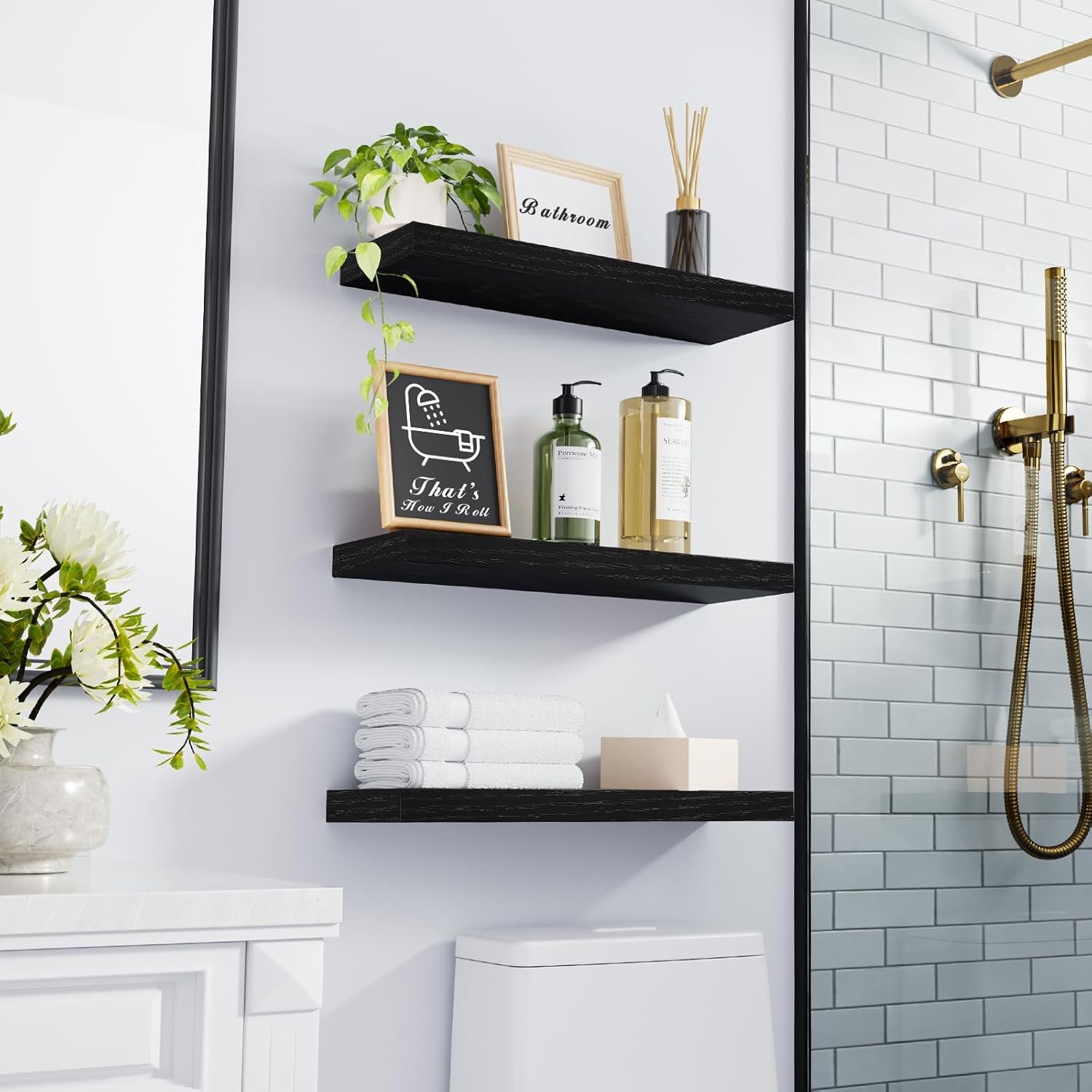
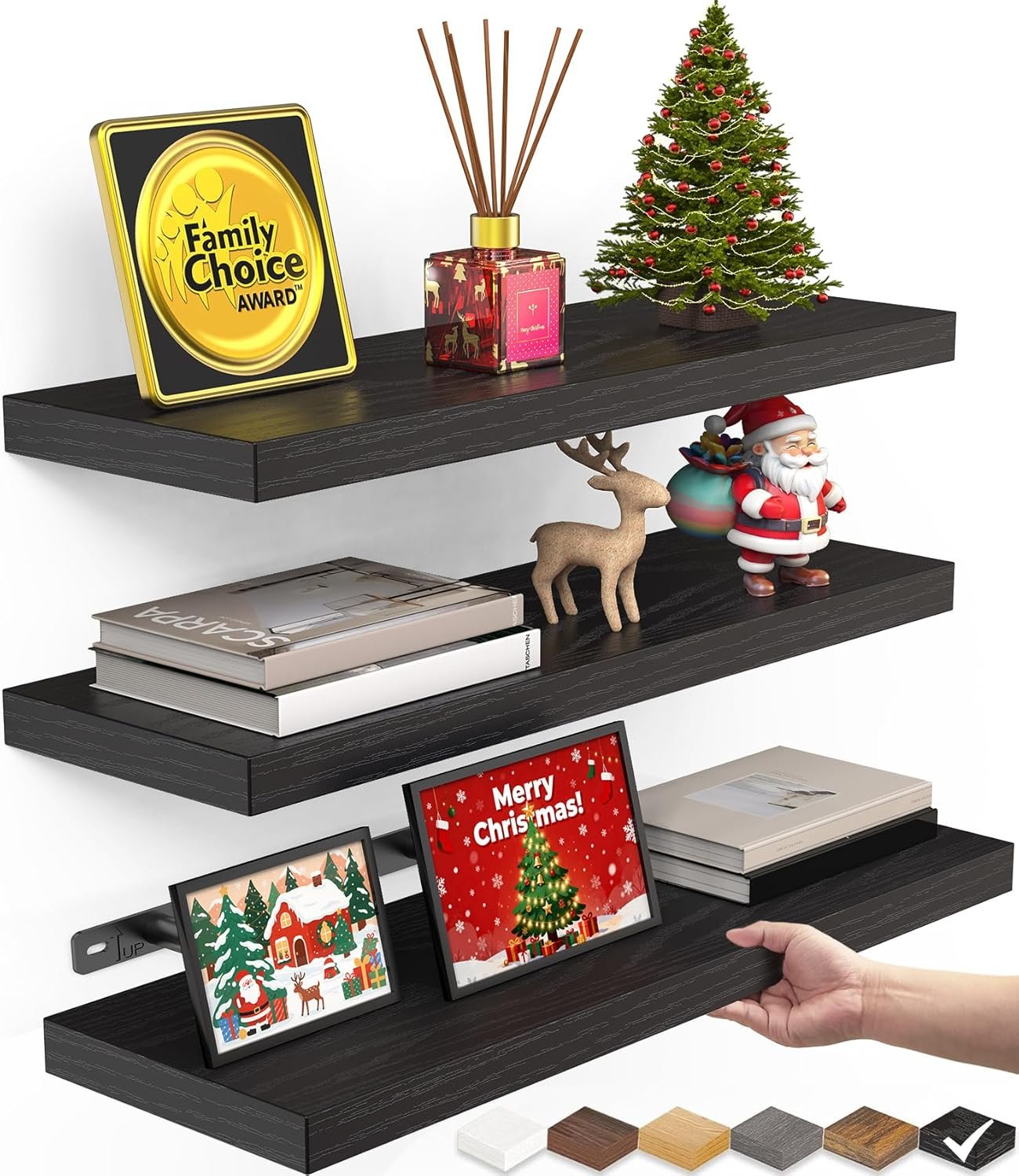
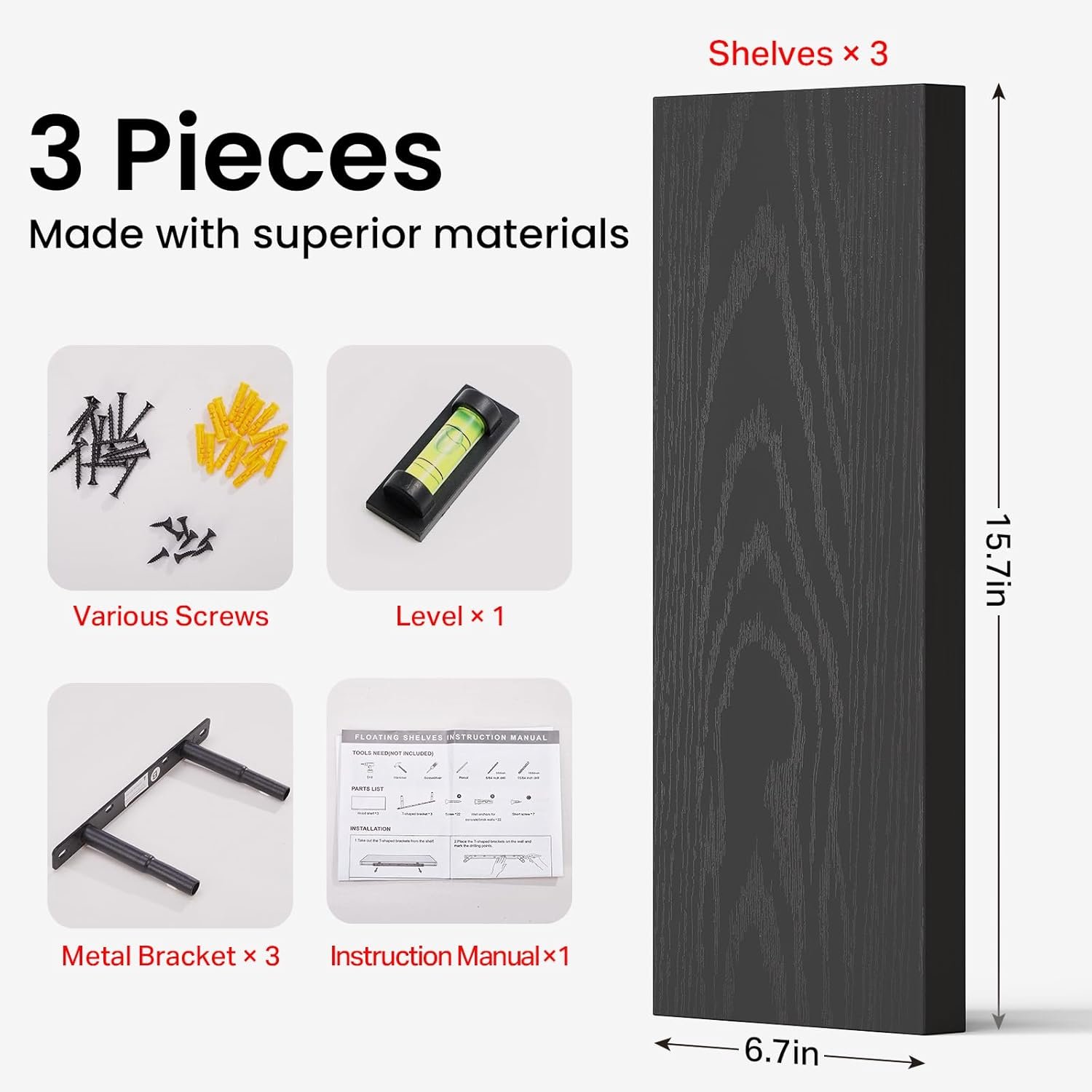

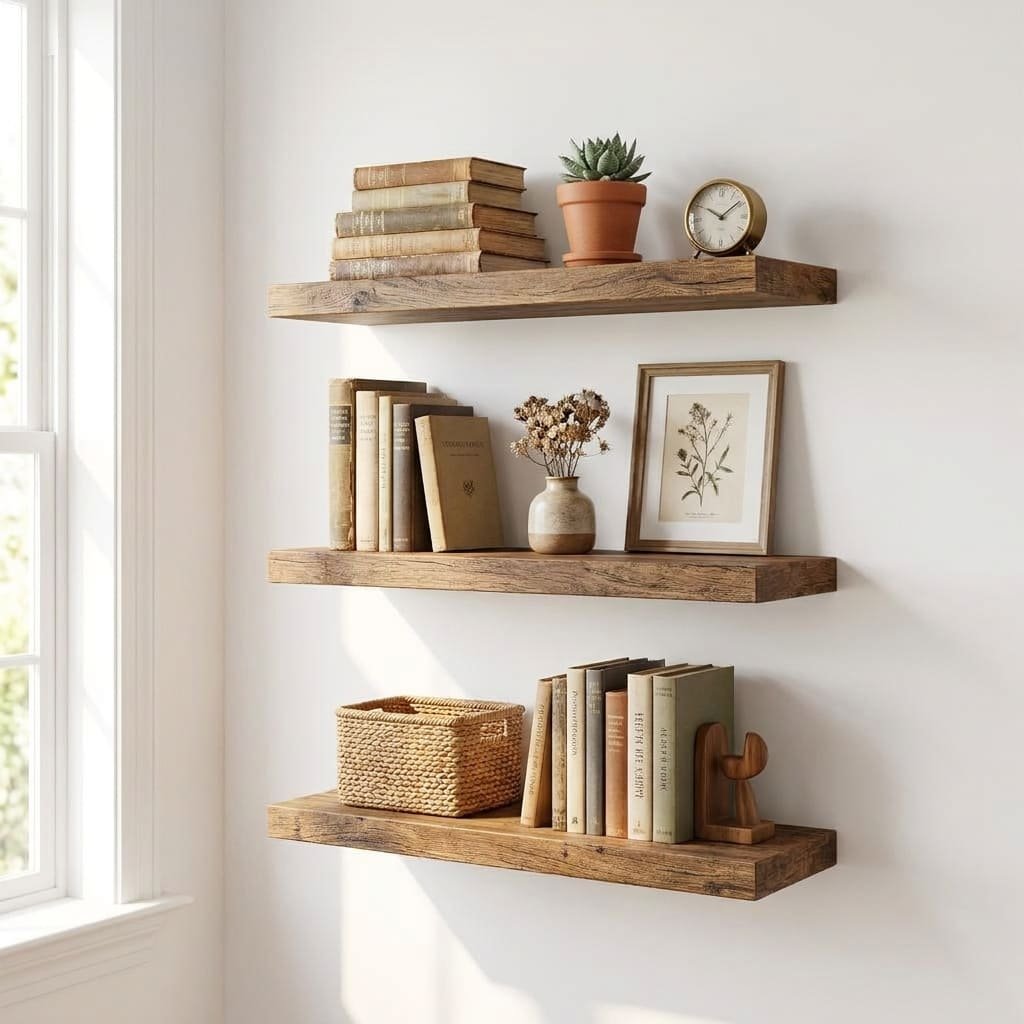
Tired of cluttered countertops and limited storage space? The BAYKA Floating Shelves set of three transforms wasted wall space into stylish, functional storage. Each 15.7-inch rustic wood shelf holds up to 22 lbs with hidden brackets for a sleek look, perfect for bathrooms, kitchens, or bedrooms. Easy installation with all hardware included means you can organize and declutter your home in minutes.
Disclosure: As an Amazon Associate, I earn from qualifying purchases. This means when you purchase through links on this page, I may earn a small commission at no extra cost to you.
These floating shelves get blamed for failing more often than they actually deserve. In most cases, the shelf itself isn’t the problem — a specific, avoidable mounting mistake is. This review covers what’s actually in the BAYKA set, then walks through the seven mistakes that cause floating shelves to sag, tilt, or pull straight out of the wall.
None of these seven mistakes are unique to this particular set. They apply to floating shelves as a category, which is exactly why understanding them matters more than any single feature this specific product offers.
Table of Contents
What Is This Floating Shelves Set?
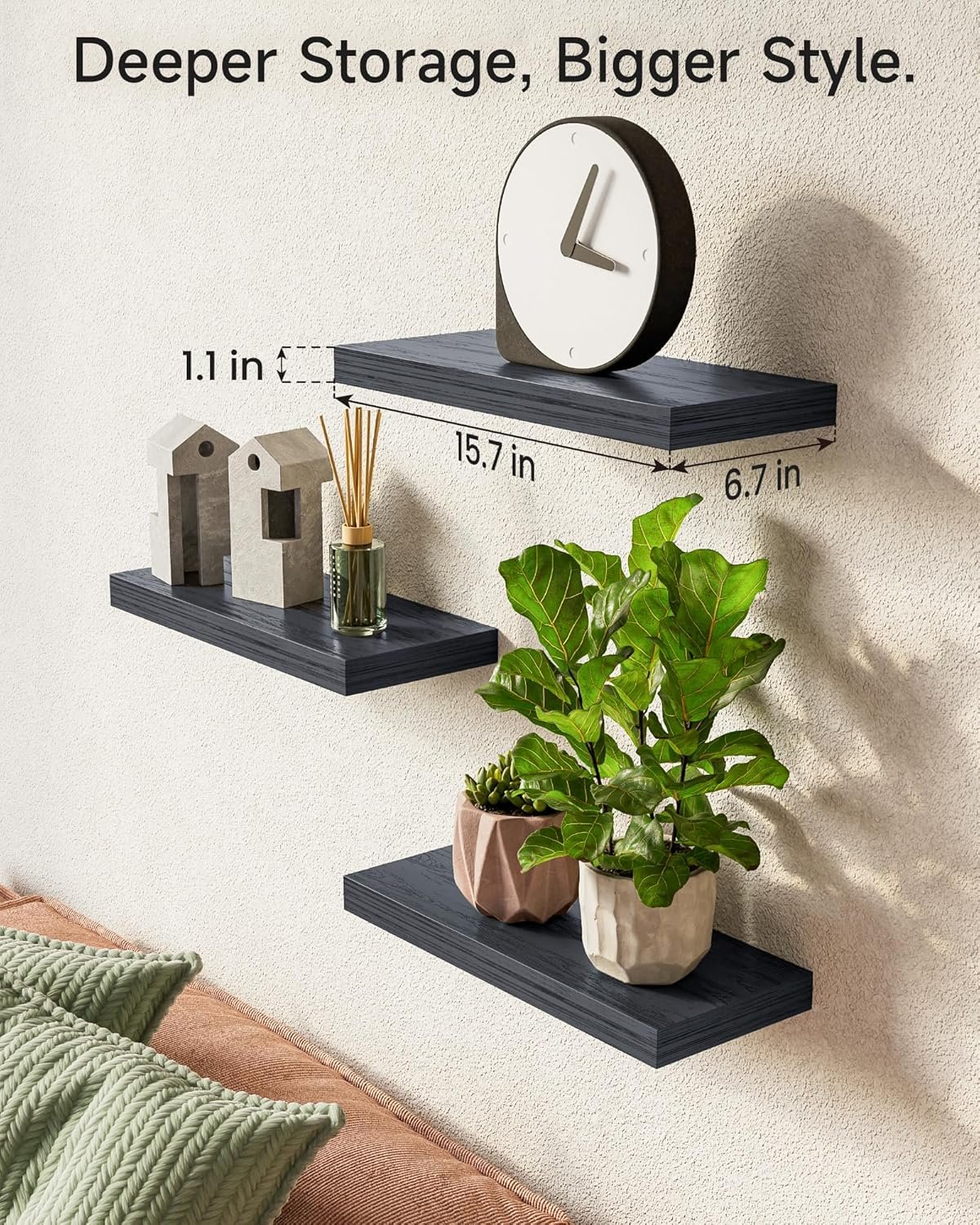
This is the BAYKA Floating Shelves set of three floating shelves, each one measuring 15.7in (W) x 6.7in (D) x 1.1in (H), made from engineered wood with hidden metal brackets. Each of the three floating shelves is rated to hold up to 22 lbs, and the set ships with mounting hardware for both wood and brick walls.
Key Specs for This Floating Shelves Set at a Glance
- Set: 3 floating shelves
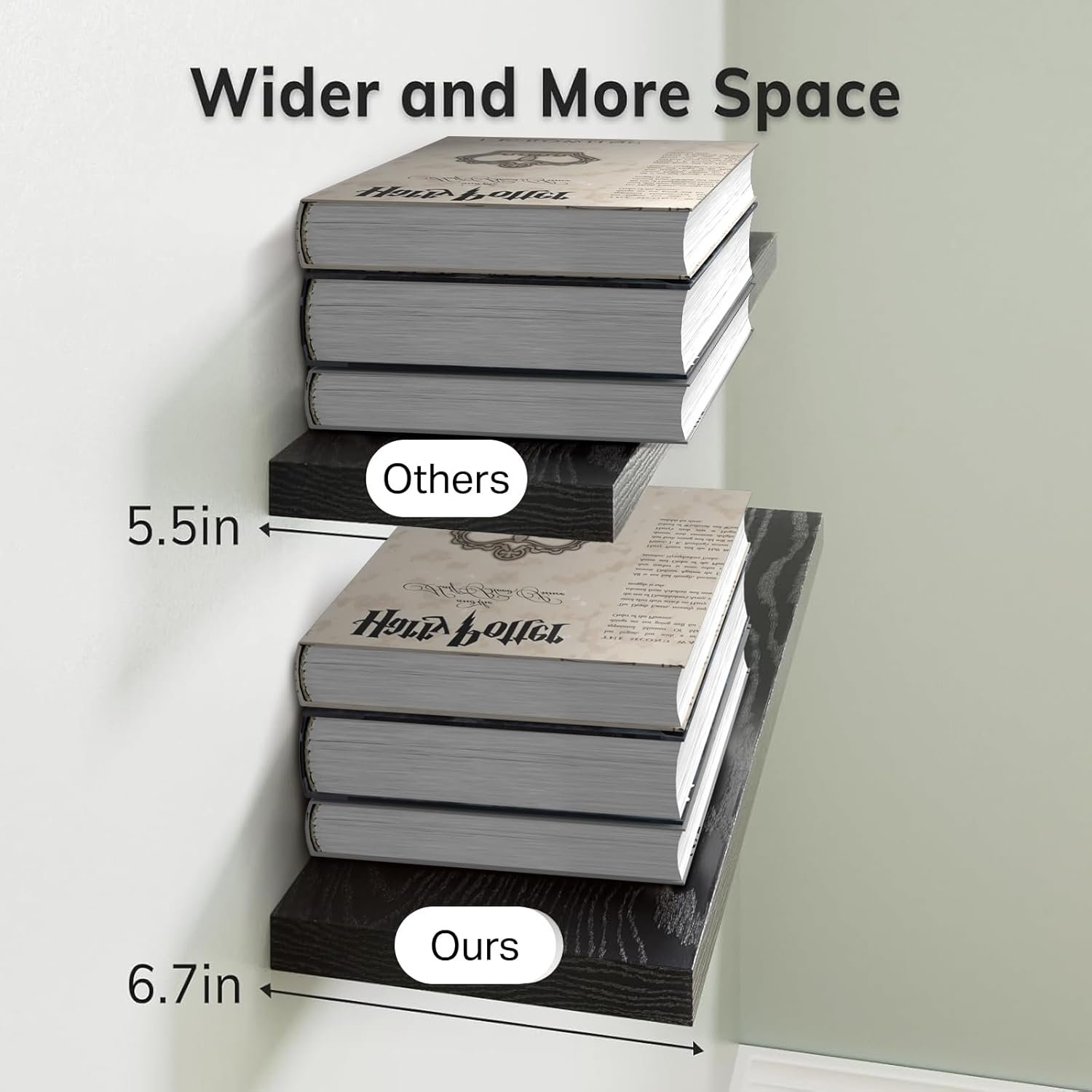
- Dimensions (each): 15.7in (W) x 6.7in (D) x 1.1in (H)
- Material: Engineered wood, hidden metal brackets
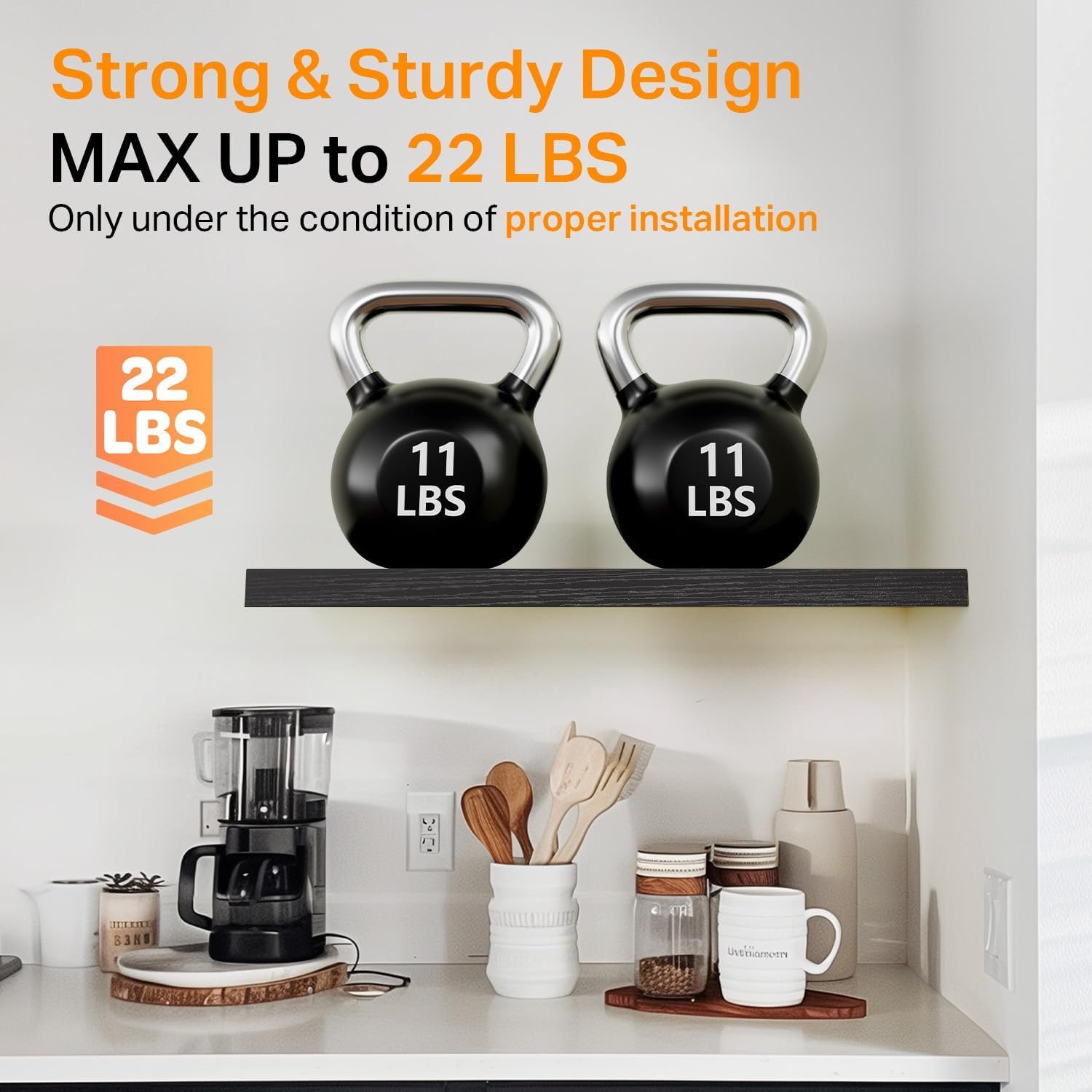
- Load Capacity: 22 lbs per shelf
- Mounting: Wall-mounted, hardware included for wood or brick walls
The 7 Mistakes That Actually Cause Floating Shelves to Fail
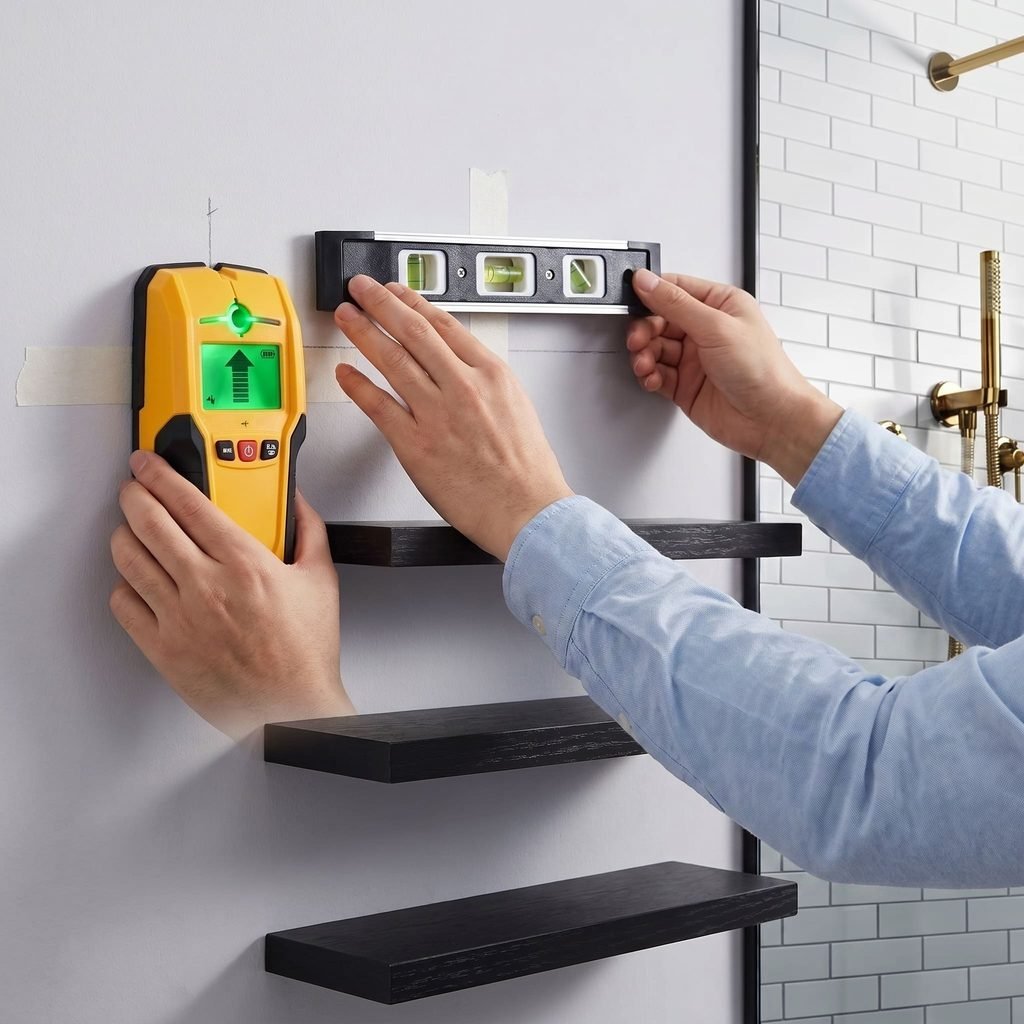
1. Skipping the Stud Finder
Most floating shelves that come crashing down do so because they were drilled straight into open drywall with no stud and no rated anchor underneath. Drywall alone has very limited holding power — it’s compressed gypsum sandwiched between two layers of paper, and it will eventually give way under repeated stress, even from a shelf rated for a reasonable weight. Running a stud finder along the mounting line before drilling takes about thirty seconds and is the single most effective way to prevent this specific failure with any set of floating shelves.
2. Ignoring the Stated Weight Capacity
A 22-lb rating on these floating shelves means 22 lbs total, spread across the whole shelf — not per item, and not a number to treat as a soft suggestion. Piling on books, a plant, and a stack of decor all at once is a common way to quietly exceed that limit long before it becomes visually obvious. Weighing what actually goes on a shelf before styling it is a simple habit that prevents a slow, gradual sag most people don’t notice until it’s already happened, at which point the fix requires taking everything down and starting over.
3. Choosing the Wrong Hardware for the Wall Type
What works on drywall doesn’t work on plaster, brick, or tile, and using the wrong anchor type is one of the most common reasons floating shelves fail within months rather than years. These particular floating shelves ship with hardware for both wood and brick walls specifically, but confirming the wall type before drilling — and using the anchor rated for it — still matters more than assuming any included hardware works universally across every surface.
4. Mounting at the Wrong Height
This mistake doesn’t cause a shelf to fail structurally, but it does ruin the practical value of floating shelves permanently, since redoing the holes means patching and repainting a section of wall. A commonly used guideline among designers is eye level for primarily decorative shelves, and roughly 12 inches above furniture for shelves meant to hold functional items within easy reach of daily use. Measuring twice before the first hole is drilled avoids a mismatch that’s expensive and time-consuming to fix afterward.
5. Overlooking the Difference Between Wall Types Entirely
This is closely related to mistake three but deserves its own mention: even within a single room, a wall can transition from drywall to a masonry chimney breast or a tiled section, and each portion may need a completely different anchor. Treating an entire wall as one uniform material is a common oversight that leads to using the wrong hardware on part of the mounting line, sometimes without the installer even realizing the surface changed partway across.
6. Overcrowding the Shelf Immediately
New shelf owners tend to load every book, plant, and decorative object onto a fresh set of floating shelves all at once. Beyond the practical weight-capacity concern already covered, overcrowding also visually undermines the clean, minimalist look that’s usually the entire reason someone chooses floating shelves over a bulkier alternative in the first place. Leaving genuine negative space between objects is both a styling choice and a structural one, and it’s often the difference between a shelf that looks curated and one that looks like an afterthought.
7. Never Checking Level Before the Final Drill
A floating shelf that’s even slightly off-level becomes impossible to unsee once it’s mounted and styled. On a shelf this size, a single degree of tilt is visible from across a normally sized room. Running a spirit level across the full mounting line — not just eyeballing one bracket — before committing to the final holes is a small step that prevents a permanent, distracting flaw that no amount of styling can fully disguise.
Why These Mistakes Matter More Than the Shelf Itself
According to The Home Depot’s own installation guide, correctly hanging any shelf comes down to the same fundamentals covered above: finding studs where available, using anchors rated for both the wall type and the intended weight, and checking for level before finalizing the installation. None of this is unique to floating shelves as a category — it’s the same baseline that applies to any wall-mounted storage, which is exactly why these seven mistakes show up across so many different shelf brands and styles, not just this one.
That’s also good news for anyone specifically evaluating these floating shelves: the shelf itself isn’t the variable most likely to cause a problem. The installation process is, and it’s a process that’s fully within the installer’s control from the very first measurement.
Matching the Anchor to the Wall
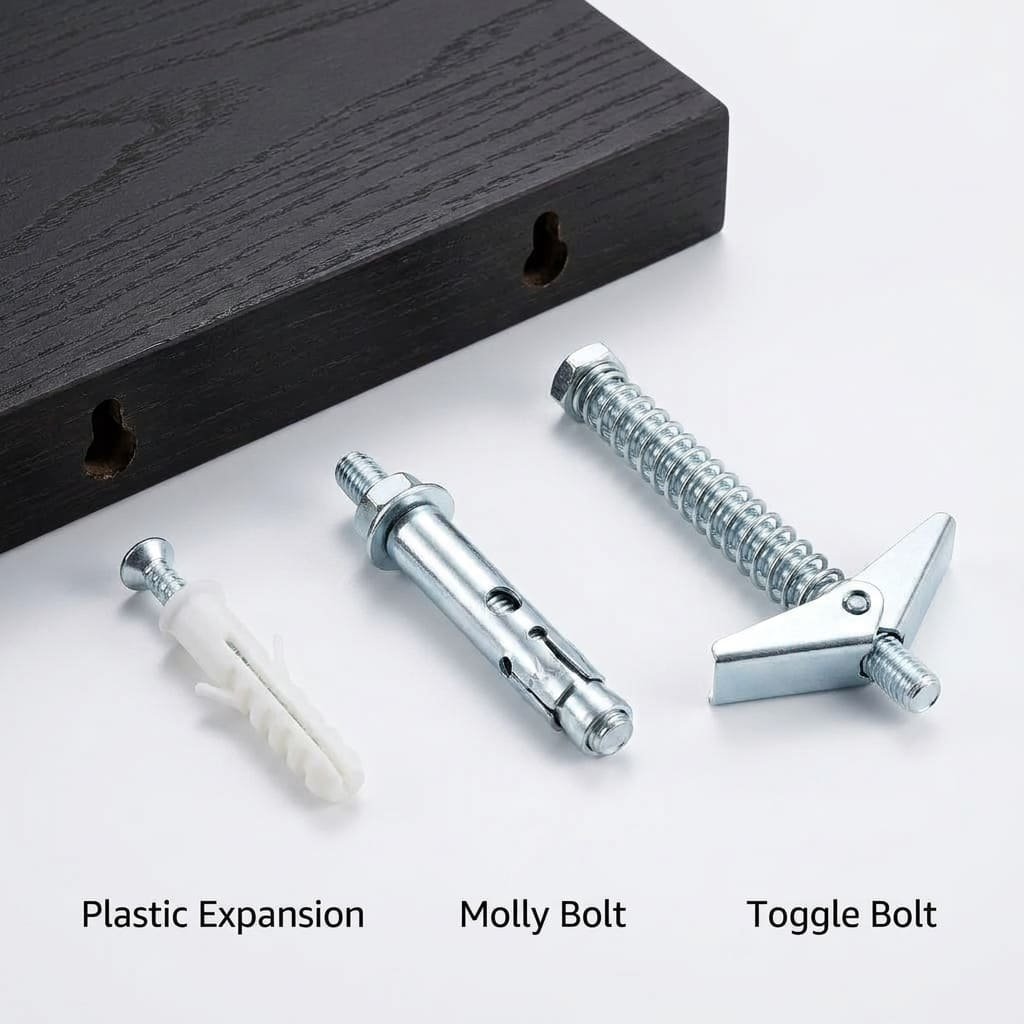
It’s worth going one level deeper on mistake three, since anchor choice is where most installation questions actually come from. Plastic expansion anchors are generally suited to lighter loads, roughly under 10 to 20 lbs, and work fine for small decorative items rather than a fully loaded floating shelf. Molly bolts and self-drilling metal anchors typically handle a wider middle range, often cited around 25 to 50 lbs, which comfortably covers a single one of these floating shelves loaded within its stated 22-lb capacity. Toggle bolts sit at the heavier end and spread force over a wider area behind the wall, useful when a stud genuinely isn’t available anywhere along the mounting line.
A reasonable rule of thumb: pick hardware rated for meaningfully more than the actual expected load, not hardware rated right at the edge of it, since real-world holding power is usually lower than the number printed on the packaging under ideal lab conditions. This margin of safety matters most for floating shelves specifically, since the hidden-bracket design that gives them their clean look also means any hardware issue stays invisible until the shelf has already started to fail.
What to Look for in Floating Shelves
If you’re comparing this floating shelves set against other floating shelves options, a few things are worth checking:
- Included hardware for your specific wall type — confirm the anchors included actually match drywall, wood stud, brick, or plaster, whichever applies.
- Stated weight capacity per shelf, not per set — a 22-lb rating typically applies to one shelf, not the combined total across all three.
- Hidden vs. visible bracket design — hidden brackets look cleaner but generally require more precise stud or anchor placement to hold securely.
- Shelf depth relative to intended use — a shallow shelf suits light decor well but may not comfortably hold larger books or bulkier items.
- Realistic expectations for uneven or mixed-material walls — a single wall can require more than one anchor type across its length.
Who Should Buy This Floating Shelves Set?
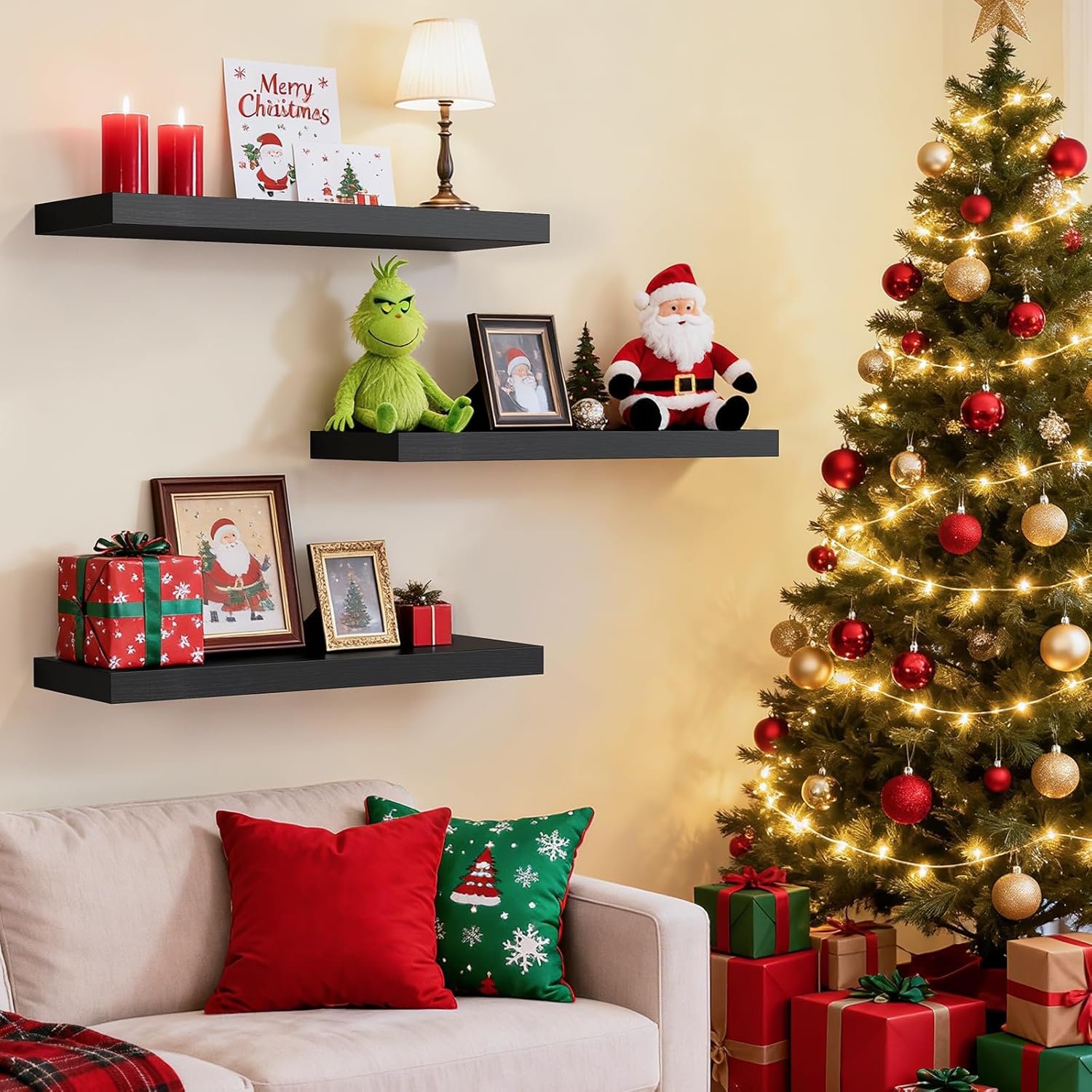
This floating shelves set is a good fit for anyone furnishing a bedroom, bathroom, kitchen, or living room accent wall who wants a clean, minimalist storage option without a bulky bookcase or cabinet taking up floor space. The included hardware for both wood and brick walls also makes it a reasonable choice across a range of home types, from newer drywall construction to older masonry.
This floating shelves set is probably not the right choice for anyone needing to store especially heavy or oversized items on a single shelf, given the 22-lb per-shelf limit, or anyone mounting into a wall type not covered by the included hardware. If you’re weighing other storage upgrades, our Furniture reviews cover additional options worth comparing.
How We Evaluated This Product
This review of the floating shelves is based on the manufacturer’s published specifications, cross-referenced against The Home Depot’s general shelf-installation guidance on stud finding, wall anchors, and leveling.
Frequently Asked Questions
Do I need to find a stud to hang these floating shelves? It’s strongly recommended whenever possible, since a stud provides far more holding power than drywall alone, though the included hardware also covers anchor-based mounting on wood and brick walls for spots where a stud isn’t available.
Is 22 lbs the limit per shelf or for the whole set? It’s per shelf — each of the three floating shelves is rated to hold up to 22 lbs individually, not 22 lbs combined across the set.
What height should I mount floating shelves at? A common guideline is eye level for decorative display and roughly 12 inches above furniture for shelves meant to hold functional, frequently used items.
Can these floating shelves be used on brick or plaster walls? Yes, the set includes hardware intended for both wood and brick walls, though confirming the correct anchor for your specific wall material is still worth doing before drilling.
Why do floating shelves eventually sag or tilt? This is most commonly caused by exceeding the weight capacity, missing the stud or using the wrong anchor for the wall type, or not checking level before the final installation.
How many items can I put on one shelf without overcrowding it? There’s no fixed number, but leaving visible negative space between objects generally keeps both the weight distribution and the visual look in check.
Can I remove and remount these floating shelves if I move to a new home? Yes, though this typically means patching the old holes and repeating the stud-finding and leveling process at the new location rather than reusing the exact same mounting points.
Final Verdict on These Floating Shelves
This floating shelves set delivers a clean, minimalist look with a reasonable 22-lb per-shelf capacity and hardware for multiple wall types included in the box. The honest takeaway is that almost every common complaint about floating shelves — sagging, tilting, pulling out of the wall — traces back to one of the seven installation mistakes above, not a flaw in the shelf itself.
Avoid those seven mistakes, and this floating shelves set holds up exactly as intended: a sturdy, good-looking storage upgrade that makes real use of otherwise wasted wall space. The shelf is only ever as reliable as the mounting behind it, which is really the entire point of this review.
This article reflects publicly available product information and general shelf-installation guidance; individual results can vary based on wall material, stud location, load distribution, and installation care.