


Zero turn mower residential models are changing how suburban homeowners maintain small to medium lawns—but picking the right one means looking beyond horsepower and deck size to long-term cost and real-world reliability. Cut through the marketing fluff, and let’s identify which zero turn mower offers the best value for your home, sanity, and wallet.
Key Takeaways
- Total cost of ownership (fuel, maintenance, parts) is just as important as the sticker price when choosing the best zero turn mower for home use.
- For 1 acre or less, stick to 42-54 inch decks, hydrostatic transmissions, and proven reliability—not just big specs or commercial features you won’t use.
- Homeowner reviews reveal frequent complaints about fuel systems, drive belt failure, and missing comfort features. Ask smart questions before you buy.
- Quick buyer summary — which model to buy right now
- Top-rated residential zero-turn models for 2024 — side‑by‑side comparison
- What specs matter if you have 1 acre or less (how to pick the best zero turn mower for home use)
- Small zero-turn mowers vs. larger models — storage, beginner friendliness, and operating costs
- Common homeowner complaints — maintenance, cutting quality, and durability to watch for
- Realistic long-term ownership costs (beyond purchase price)
- New safety features and technologies (past 12 months) and how they affect owners
- Maintenance checklist and pre-purchase inspection (what to test & ask the dealer)
- Recommended picks by homeowner profile (actionable shortlists)
- Three critical buyer questions competitors miss (and concise answers to each)
- Short FAQ & quick buying checklist (final 60–90 second read)
Quick buyer summary — which model to buy right now
If you want the best zero turn mower for home use and don’t want to overthink it, here’s your cheat sheet:
- Best Overall: Husqvarna Xcite Z345 — Mid-tier price, 54-inch deck, 25 HP Kohler, known for robust construction and reliability. Buy this if you want the best balance of durability and performance for most residential lots. (source)
- Best for ≤1 acre or budget: Toro TimeCutter 42-Inch — $3,465 entry price, Briggs & Stratton engine, superb for tight suburban layouts and small storage. Buy this if you want no-frills reliability on a small/mid-size yard.
- Best electric: John Deere 370R 58V 42-Inch Electric — Effortless operation, ultra-quiet, and eco-friendly. Buy this if you want zero gas/fume hassles and don’t mind investing for long-term battery savings.
All three are top picks in recent residential zero turn mower reviews, giving you strong odds for years of easy mowing.
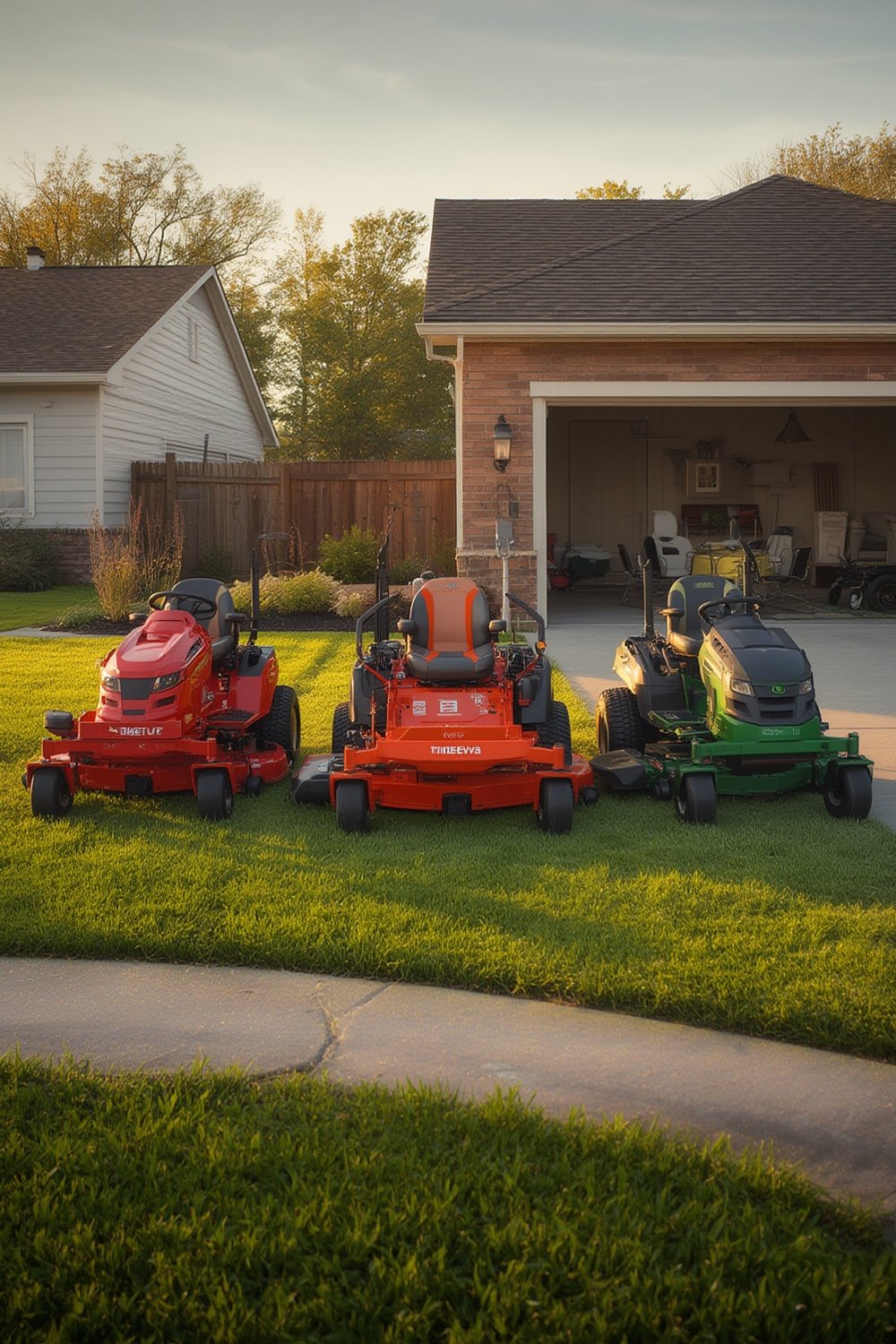
Top-rated residential zero-turn models for 2024 — side‑by‑side comparison
Here’s how the top models stack up, so you can match features and price to your actual needs:
| Model | Cutting Width | Engine Power | Price | Best For | Pros | Cons |
|---|---|---|---|---|---|---|
| Husqvarna Xcite Z345 | 54″ | 25 HP Kohler | Mid-tier | All-around home use (suburbia, up to 1.5 acres) | Durable, metal deck/fenders, aggressive tread tires | Large footprint for small sheds |
| Toro TimeCutter MAX 54-Inch | 54″ | 24 HP Kohler | $4,699.99 | Wide yards, comfortable rides | MyRIDE suspension, proven reliability | Fuel use higher than 42″ |
| Toro TimeCutter 42-Inch | 42″ | Briggs & Stratton | $3,465 | Small lawns, budget buyers | Compact, easy controls, lowest operating cost | Basic comfort, no frills |
| Cub Cadet Ultima ZT1 42-Inch | 42″ | Kawasaki | Entry-level | Starter/first zero turn, smaller properties | Robust build, reputation for value | No advanced suspension |
| John Deere 370R 42-Inch Electric | 42″ | 58V Battery | Premium | Quiet, easy, no gas/smells | Low maintenance, no starting hassle | Batteries expensive; must budget for eventual replacement |
If you mow weekly and want proven zero turn lawn mower residential reliability, focus on models with fabricated (not stamped) decks, hydrostatic transmissions, and good local dealer support. Take note: battery tech is getting better, but real repair costs are higher if you mow a lot or store the machine long-term unused.
Want to improve your garage and tool organization for mower storage? Check out options like a wall-mounted garage tool organizer to save space.

What specs matter if you have 1 acre or less (how to pick the best zero turn mower for home use)
If your lawn is 1 acre or less, the best zero turn mower for home use is not the largest or most powerful. Instead, aim for:
- Cutting width: 42-54 inches—the sweet spot for fast mowing, maneuverability, and easy storage. (source)
- Engine power: 24-26 HP (gas) covers tough grass without excess fuel use.
- Transmission: Hydrostatic is a must for smooth handling and quick turns.
- Tire tread: Aggressive/open tread avoids spinning—especially critical if you mow on slopes or when grass is damp.
Bigger cutting decks look impressive but add nothing for yards under 1 acre (they even increase fuel and maintenance costs). Stick to reputable brands that offer hydrostatic drives and easy-access decks for blade or belt changes. For more ways to cut yard-related stress, try efficient oscillating sprinklers for watering
Small zero-turn mowers vs. larger models — storage, beginner friendliness, and operating costs
Small zero turn mower models (42-inch decks) save space and dollars:
- Storage: Fits in most 1-car garages or standard sheds—no lawn equipment overflow. Larger models often require double-door sheds or precious garage space.
- Learning curve: Easier for new users; lap bars, start/stop, and steering feel intuitive. Electric models like the John Deere 370R mean just sit, push, and mow.
- Operating cost: 42-inch models burn less fuel ($200-$400/yr), while 54-60 inch options climb to $400-$600/yr. (Battery models skip gas but bank on $600–$1,500 batteries every 5–7 years.)
Want even less lawn care stress? Consider pairing your mower choice with a quality bedroom air purifier like the LEVOIT for post-mowing relaxation indoors.
Common homeowner complaints — maintenance, cutting quality, and durability to watch for
Reading residential zero turn mower reviews reveals several recurring gripes and reliability problems:
- Fuel system: No gas gauge or low fuel warning (especially on Toro models). This can strand you mid-mow if you’re not disciplined about top-ups.
- Belts: Drive or deck Belt replacement, belts popping off mid-job, and squealing under stress. This is a top complaint in Tractor Supply user reviews.
- Tires: Flat front tires that don’t hold air and no-run-flat options on many models. Repairs can add time and cost if you mow often or hit debris.
- Missing hour meter: Hard to track true use for maintenance and warranty.
- Control arms: Missized or slipping control arms bother many users, especially those switching from traditional tractors.
- Comfort/design: Shoulder straps or seat designs that cause discomfort on longer cuts.
When doing your own residential zero turn mower reviews, inspect dealer floor models for loose controls, deck welds, and tire quality. Don’t be afraid to ask for a demonstration—or for written confirmation of what’s covered under warranty.
Upgrade your outdoor time with a reliable string lighting setup for early evening mowing or garage work.
Realistic long-term ownership costs (beyond purchase price)
Even the best zero turn mower for home use comes with ongoing costs you rarely see in ads:
- Annual fuel: 42-inch decks: $200–$400/yr, 54–60 inch: $400–$600/yr (typical use).
- Belt replacement: $150–$400 every 2–3 years. Belts are wear items (often NOT covered by warranty).
- Tire repairs/replacement: $200–$600 per pair, especially for non-run-flat fronts.
- Battery replacement (electric): $600–$1,500 after 5–7 years.
- Dealer service labor: $100–$200/hour (flat rates for common repairs add up fast).
- Maintenance items: Oil: $50–$150/yr, Air filter: $20–$50/yr, Spark plug: $15–$30/yr.
- Warranty: Most models limit coverage of “wear” parts. Confirm details before you commit.
DIYers can trim some costs. If you store your mower in a garage or shed, boost efficiency and save time with a well-organized storage tray system for blades, oils, and safety gear.
New safety features and technologies (past 12 months) and how they affect owners
This year, residential zero turn mower models adopted comfort and innovation trends previously found only on commercial units:
- Suspension seats/systems: Toro’s MyRIDE and Bad Boy’s new front suspension give a much smoother ride—especially important if you have bumpy ground or mow for more than 30 minutes at a time. (source)
- Electric drivetrains: Models like John Deere 370R are now truly whisper-quiet. No more fumes, chokes, or pull-cord fuss—just city-friendly mowing and easy storage.
- Advanced blades/mulching: The Ryobi electric ZTR uses double-stacked blades (six total) for better mulching in fewer passes. Works great on thick spring lawns.
- Multi-mode controls: Electrics let you tune for battery life or max power depending on grass density—handy for busy weeks or dry spells.
Realistically, if you want less soreness and fewer mishaps, choose a newer residential zero turn mower with at least basic seat suspension. Looking to create a safer, more comfortable home base? Spring for aging-in-place home modifications if elderly family members visit or use the yard.
Maintenance checklist and pre-purchase inspection (what to test & ask the dealer)
Before you hand over your cash (or finalize delivery), check these key items on any zero turn mower residential candidate:
- Fuel gauge or low fuel indicator present and accurate?
- Belts: Inspect for tension, alignment, and visible wear—even on showroom units.
- Tires: Air up all four, examine for leaks or cheap bead construction.
- Hour meter: Ask if installed. If missing, factor in manual tracking for scheduled maintenance.
- Deck: Check welds/joints and ask if it’s fabricated or stamped.
- Warranty: What exactly is covered (belts, tires, electrical, deck)?
- Parts availability: Is there a local dealer and do they stock common wear items?
Get these answers in writing if needed—you’ll thank yourself during break-in and your first spring tune-up. To streamline your regular maintenance, look at high-quality garden tool sets that make minor repairs a breeze.
Recommended picks by homeowner profile (actionable shortlists)
- Budget (≤$3,500, ≤1 acre): Toro TimeCutter 42-Inch ($3,465) — Simple, compact, easy for beginners. Risk: No hour meter; basic comfort only.
- Best Mid-tier for comfort & reliability: Husqvarna Xcite Z345 — Metal body, rugged deck, 25 HP, hydro transmission. Risk: Needs more storage space and higher annual fuel.
- Best electric (minimal maintenance/no fumes): John Deere 370R Electric (58V, 42″) — Super quiet, ideal for noise-sensitive neighborhoods, no gas hassle. Risk: Battery price ($600–$1,500) in 5–7 years.
- Best wide-deck for speed: Toro TimeCutter MAX 54-Inch ($4,699.99) — Fastest mow, smooth MyRIDE ride. Risk: Higher fuel and annual belt costs; tight for single-bay garages.
Balancing cost and comfort? Pair your mower decision with a TP-Link Smart Plug for hands-free garage door automation or easy outdoor equipment setup.
Three critical buyer questions competitors miss (and concise answers to each)
1. What are the real long-term ownership costs, not just the sticker price?
Annual fuel ($200–$600), belts ($150–$400 every 2–3 years), and battery replacement (electrics: $600–$1,500 every 5–7 years). Dealer repair starts at $100–$200/hour. Assume a true 5-year cost is 20–30% above the tag price, unless you DIY everything.
2. How do most zero turn mower residential models hold up after several years?
Decks or frames on name brands last 7+ years easily if maintained. Most issues after 3–5 years are belt, tire, or battery failures—not catastrophic engine damage. Stamped steel decks (often budget models) may crack faster than fabricated ones, especially if you mow rough ground.
3. What’s realistic for mowing time and range (fuel or battery) per session?
42-inch gas zero turns typically cover 1 acre in under 50 minutes on a single tank (with gas left over). Electrics like John Deere 370R cover the same, but runtime can drop fast in thick grass, slopes, or hot weather. Check amp-hour ratings and ask for tested performance, not just marketing claims.
Short FAQ & quick buying checklist (final 60–90 second read)
What size zero turn mower residential is best for a 0.5–1.0 acre yard?
Choose a 42–54 inch cutting deck for best efficiency and storage. Larger decks do not save significant time on small yards and cost more to operate.
Is gas or electric better for residential mowing?
Gas offers longer run times and lower upfront cost; electric simplifies maintenance, is quieter, and suits smaller/noisier neighborhoods but expect battery replacement ($600–$1,500 every 5–7 years).
How much space do I need for storage?
42-inch models fit single-bay garages or standard sheds. 54–60 inch decks and larger require bigger, double-door storage.
Are belts and tires covered under warranty?
Usually not—these are considered wear items. Always verify warranty details before purchase.
What’s a good one-line buying checklist?
Deck 42–54”, hydro transmission, fuel/battery indicator, comfort seat, local dealer support, warranty on frame/engine, verify parts stock, inspect controls/deck/tire quality, ask about maintenance costs.